China wooden adjustable electric hospital bed Company: What Buyers Should Check Before Ordering
What This Product Is and Where It Fits
| Parameter | Standard Range | Customisation Window |
|---|---|---|
| Frame material | Beech or maple hardwood, steel-reinforced joints | Oak, ash, or engineered wood core with veneer |
| Actuator count | 3-4 (back, knee, height, optional Trendelenburg) | Up to 5 with cardiac chair and reverse Trendelenburg |
| Safe working load | 180-250 kg depending on configuration | 280 kg with upgraded actuators and frame bracing |
| Deck articulation | 4-section: back 0-70°, knee 0-30° | 5-section with auto-contour; ±5° tolerance |
| Caster diameter | 125 mm central-locking, conductive tread | 150 mm with directional lock; anti-static option |
| Finish system | Water-based polyurethane, 3-coat, 80-100 µm | UV-cured acrylic, 2-coat, 60-80 µm for faster throughput |
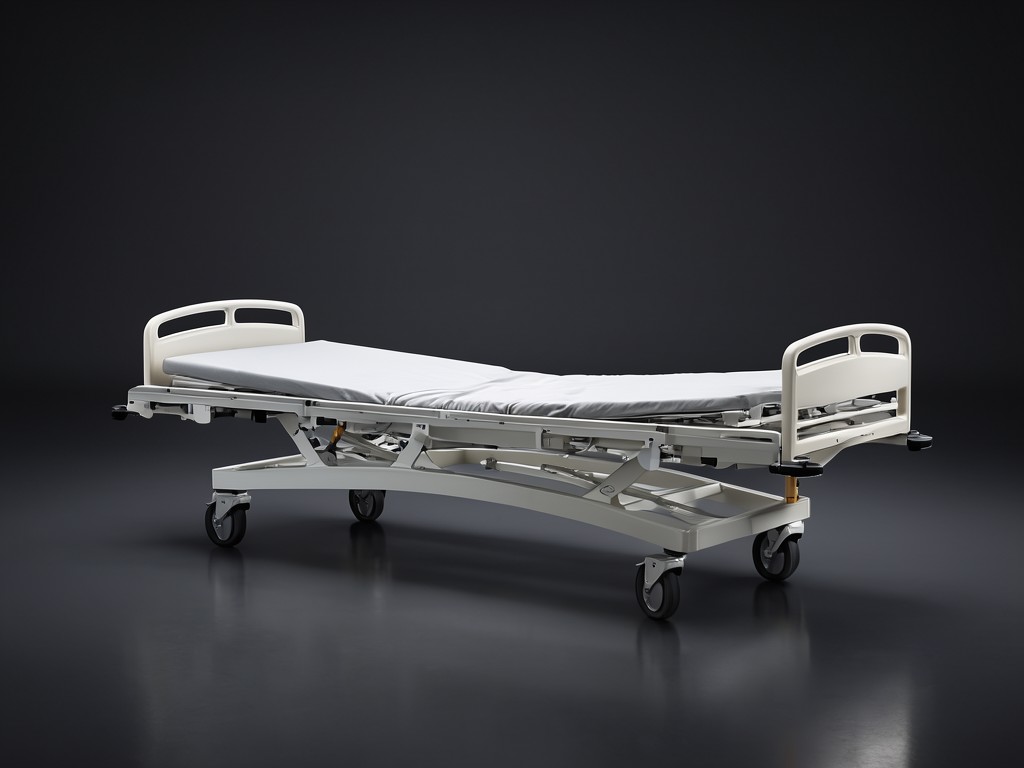
This product family sits between fully clinical ICU platforms and basic residential care beds. The wooden head and foot boards serve aesthetic and infection-control purposes — smooth, non-porous surfaces withstand sodium hypochlorite and quaternary ammonium disinfectants better than textured laminates. Buyers specify these beds for step-down units, long-term care wings, and private-pay rooms where procurement specs call for a 10-year frame life with actuator replacement at year 5-7.
How It Performs in Use
The complaint that repeats across reorders is actuator drift under sustained load. A 200 kg patient in Fowler's position for 12 hours tests the back-raise actuator's holding force and the control box's duty-cycle management. Cheaper control boxes cut MOSFET count, letting the actuator creep 10-15 mm overnight — enough to trigger nurse-call alarms and generate warranty tickets.
Deck articulation noise is the second driver of returns. Polymer bushings at the pivot points dry out after 18-24 months of daily cycling. The spec calls for PTFE-impregnated bronze at the back-knee junction and acetyl at the thigh-calf joint. Factories that substitute plain nylon save ¥12 per bed but create a squeak that shows up in month 14, right after the 12-month warranty expires.
Specification callout: require 20,000-cycle endurance test data on the specific actuator-control box pairing. Acceptance threshold: <3 mm drift at rated load after 8-hour hold, <45 dB(A) articulation noise at 1 m distance.
How It Is Built and What That Changes
Mortise-and-tenon with steel insert
Traditional joinery reinforced with M8 threaded inserts epoxy-bonded into the tenon. Distributes shear loads into the long grain. Adds ¥45 per joint but eliminates the bolt-loosening failure mode that appears at month 18 on pure mechanical fasteners.
Inspection: torque-check inserts at 12 Nm after assembly; pull-test 5% of joints to 500 N.
CNC pocket machining for actuator mounts
Actuator brackets pocketed into the steel sub-frame, not surface-mounted. Removes the 3 mm stand-off that creates a moment arm under off-center loads. Reduces bracket weld fatigue by 60% in accelerated testing.
Trade-off: requires 5-axis CNC cell; adds 2 days to frame lead-time versus welded bracket fabrication.
Finish adhesion is the silent warranty killer. Wood moisture content must sit at 8-10% before coating. Kiln schedules that rush to 6% create micro-checks that telegraph through the polyurethane within 6 months of UV exposure near windows. The factory should furnish moisture-meter readings from each drying batch, not just a certificate of conformance.
Specification Range and Customisation Limits
Height range is the most negotiated spec. Standard 400-800 mm deck height suits 90% of facilities. Going below 350 mm for fall-prevention protocols forces a low-profile actuator with 30% less thrust — safe working load drops to 160 kg. Going above 850 mm for bariatric transfer requires a telescopic column set that adds ¥380 and 15 kg to the bed weight.
- Side rails: full-length split or half-length; latch force 40-60 N to meet entrapment gaps
- Control handset: wired IP66 standard; wireless adds ¥120 and requires battery replacement protocol
- Scale system: load-cell integration ±1 kg accuracy; adds 4 kg and requires calibration port access
- Battery backup: 2 Ah sealed lead-acid standard; 5 Ah lithium option for 8-hour runtime
Custom colours on wood components add 10 days to the finish line. The water-based system cannot match Pantone references closer than ΔE 2.0. UV-cured acrylic hits ΔE 1.0 but reduces chemical resistance — not suitable for units using hydrogen peroxide vapour decontamination.
Who Uses It and Where It Matters
Private-label buyers for national hospital chains specify this platform when their tender documents require "residential aesthetic with clinical durability." The wood boards satisfy the architectural review boards that reject all-metal frames in patient-facing areas. The real service condition is 15 articulation cycles per day, 365 days a year, with terminal cleaning between patients using 1000 ppm chlorine solution.
Long-term care operators buy on a 7-year replacement cycle. They track cost per patient-day: frame depreciation, actuator replacements, caster swaps, and labour for preventive maintenance. A bed that needs actuator service at year 4 instead of year 6 adds ¥0.80 per patient-day — enough to flip a 200-bed contract.
Export distributors serving Southeast Asian private hospitals need the 230V/50Hz control box with Type G plug moulded, not an adapter. They also require bilingual (English/local language) handset overlays and country-specific warning labels applied before crate closure.
Requirements by Buyer Segment
Procurement officers at public health systems write tenders around total cost of ownership. They need documented 20,000-cycle actuator data, finish salt-spray results (48 h neutral, no blistering), and a spare-parts price list locked for 5 years. They will audit the factory's incoming inspection records for actuator batch codes.
Private-label buyers need artwork-ready headboard panels (300 dpi, CMYK, 3 mm bleed) and a MOQ low enough to run 50-unit SKU tests. They also require the factory to hold 2 weeks of safety stock for their top 3 configurations — this is a working-capital negotiation, not a production constraint.
- Distributors: consolidated container loading plans, mixed SKU palletisation, replacement parts kit per 50 beds
- Dealers: white-glove delivery packaging, assembly video QR codes on each crate, 4-hour on-site setup SLA
Packing, Marking and Freight Configuration
Each bed ships semi-knocked-down: frame assembly in one crate, head/foot boards in a second, actuator set and control box in a third. This cuts crate height to 1.1 m, allowing double-stacking in 40' HC containers — 24 beds per container versus 14 fully assembled. Corner protectors on the wood components are 50 mm EPS, not cardboard; the latter compresses 40% under stack load and transfers impact to the finish.
Crate marking follows the buyer's warehouse management system: GS1-128 barcode with GTIN, batch date, and configuration code. Inside each crate, a laminated checklist maps part numbers to assembly steps. Missing this checklist is the number-one cause of dealer assembly errors and missing-parts claims.
Freight warning: actuators must ship in the retracted position with shipping pins engaged. Unpinned actuators can extend under vibration, bending the piston rod — a ¥280 replacement that voids the actuator warranty if the pin hole shows deformation.
Ordering, Tooling and Lead-Time Questions
What is the minimum order quantity for a custom headboard profile?
50 units. The CNC profile tooling costs ¥8,500 and takes 12 days to cut and prove. Below 50 units the tooling amortisation exceeds the per-unit margin. For one-off trials, we can hand-shape a prototype profile but the per-unit labour adds ¥220 and the finish match cannot be guaranteed.
How do you handle actuator lot traceability for warranty claims?
Each actuator carries a laser-etched batch code linked to the factory's test bench data: no-load current, full-load speed, holding force at 2000 N, and thermal shutdown temperature. The control box firmware reads the actuator ID on first power-up and logs it. Warranty claims require the batch code; we cross-reference against the 5% destructive-test samples retained from each production lot.
What is the lead-time delta between standard and custom finish colours?
Standard colours (white, maple, walnut, grey) ship in 25 days from PO confirmation. Custom colours add 10 days for colour-match approval panels and 5 days for the UV-cured line changeover. Water-based line changeover is 2 days but the chemical resistance spec drops — confirm the cleaning protocol before selecting the finish system.
Can we consolidate a mixed-SKU container with different actuator voltages?
Yes, but each voltage variant needs its own control box firmware and handset labelling. The factory runs a 4-hour changeover between voltage lines. Plan for 3 extra days on the production schedule and a 10% MOQ bump per voltage variant to absorb the changeover loss. Mixed containers ship with a master packing list that segregates crates by voltage code.
Ready to Review Tooling and Sample Plans?
Send us your tender specification, target unit cost, and annual volume forecast. We'll return a tooling schedule, actuator test data pack, and a first-article inspection protocol within 5 working days.
Start the technical review