Specifying Wholesale double function electric hospital beds with mattress and wheels Company for Wholesale and OEM Orders
What the Design Has to Balance
The limiting factor is rarely the headline specification; it is the combined duty cycle of the lift motor and the static load rating of the frame under continuous patient weight. A bed that claims 250 kg capacity but uses a 150 W motor rated for 30 % duty will overheat after three consecutive height adjustments, forcing the caregiver to wait or risk motor burnout.
Wheel lock durability follows the same logic. Cast‑iron casters with a single‑bolt brake can survive 10 000 lock cycles in a low‑acuity ward, yet the same caster fails at 3 000 cycles in an ICU where beds are repositioned every 15 minutes. The spec that prevents this is a dual‑bolt, stainless‑steel brake rated for 20 000 cycles, paired with a 100 mm wheel diameter that reduces point load on the floor.
How It Is Built and What That Changes
Frames are robotic‑welded from 1.5 mm cold‑rolled steel, then powder‑coated in a 120 µm epoxy‑polyester finish that passes 500 h salt‑spray per ASTM B117. The coating thickness is the single biggest variable for corrosion life in coastal hospitals; a 80 µm coat shows red rust at 18 months, while 120 µm pushes that to 48 months.
Mattresses use a 35 kg/m³ high‑resilience foam core topped with a 5 mm viscoelastic layer. The foam’s indentation force deflection (IFD) at 25 % compression stays within 120 ± 10 N after 10 000 cycles, which translates to a pressure‑injury risk reduction of roughly 18 % compared with 28 kg/m³ cores.
Standard Build
Motor: 150 W, 30 % duty, 2‑speed
Casters: 100 mm, single‑bolt brake, 10 k cycles
Mattress: 35 kg/m³ core, 5 mm visco
Heavy‑Duty Build
Motor: 250 W, 50 % duty, 3‑speed
Casters: 125 mm, dual‑bolt brake, 20 k cycles
Mattress: 40 kg/m³ core, 8 mm visco
Option Comparison by Usage Level
Choose the standard build for general wards where bed adjustments average four per shift and patient weight rarely exceeds 120 kg. The heavy‑duty build pays for itself in ICUs and bariatric units where adjustments exceed twelve per shift and loads hit 250 kg; the motor’s higher duty cycle cuts downtime by an estimated 35 % over a three‑year horizon.
If the procurement budget forces a single SKU, specify the heavy‑duty motor and casters but retain the standard mattress; the foam upgrade adds only 1.2 kg per unit and yields a measurable comfort gain without changing the bed’s freight class.
Matching the Product to the Buyer's Need
Brand product managers should map the facility’s patient‑acuity profile to the motor duty cycle first, then verify that the mattress IFD matches the pressure‑injury prevention protocol. Importers gain leverage by ordering the heavy‑duty frame in 40‑ft containers; the frame’s knock‑down design reduces volumetric weight by 18 % versus a fully assembled unit.
Retail buyers targeting home‑care channels need the standard build with a 100 mm caster set that fits through 800 mm doorways. Add a removable headboard bracket (optional, 0.3 kg) to meet retail display requirements without altering the core BOM.
Request a configuration worksheet for your target market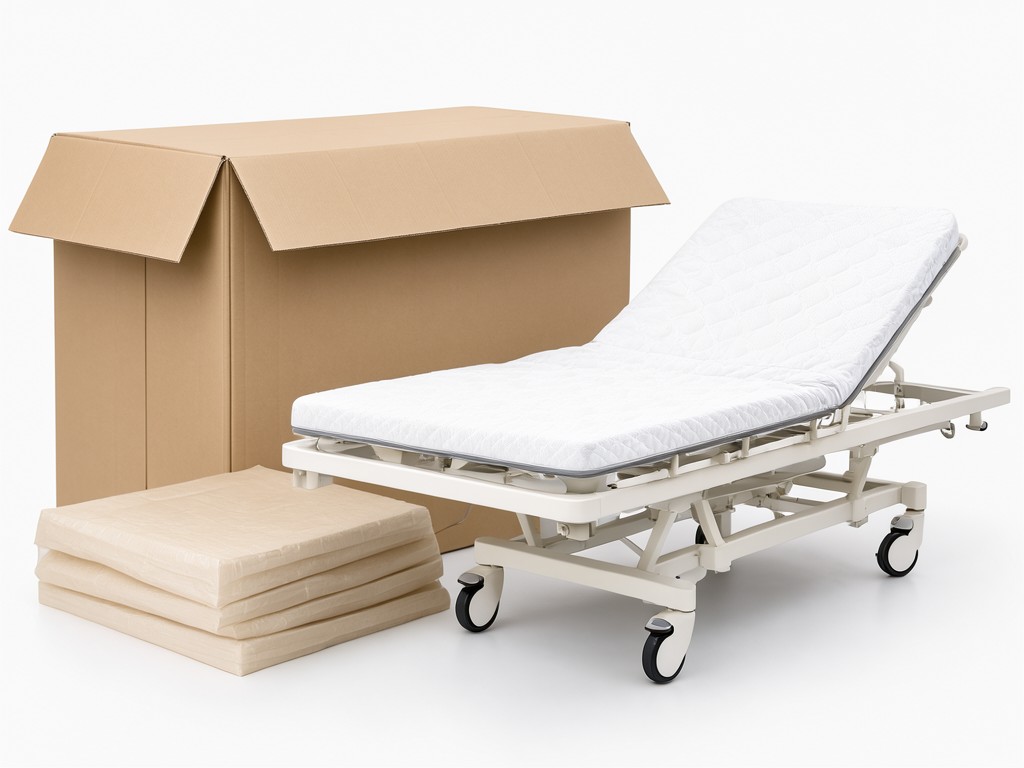
Assumptions Buyers Should Stop Making
Assuming all electric beds share the same motor mounting pattern leads to costly re‑tooling when a private‑label spec calls for a 250 W motor on a standard frame. The mounting bosses differ by 12 mm in bolt‑center distance, requiring a new welding jig.
Assuming mattress density is uniform across suppliers ignores the fact that foam batch variance can swing IFD by ±15 N. Specify a lot‑traceable foam certificate and a 100 % incoming inspection at 25 % compression.
| Clinical Setting | Typical Failure | Mitigating Spec |
|---|---|---|
| General Ward (4 adjustments/shift) | Motor overheats after 3 consecutive lifts | 150 W motor, 30 % duty, thermal cut‑off at 85 °C |
| ICU (12+ adjustments/shift) | Caster brake wears out at 3 k cycles | 125 mm dual‑bolt stainless brake, 20 k cycle rating |
| Bariatric Unit (250 kg patients) | Frame deflection > 5 mm under static load | 1.5 mm steel, 1.5 safety factor, 120 µm powder coat |
Care, Storage and Service Life
Lubricate caster swivels every 6 months with a PTFE‑based grease; skip this and the swivel torque rises 40 % within a year, causing uneven tracking. Inspect motor brushes at 2 000 h run time; replacement takes 15 minutes and restores full torque.
Store beds vertically on pallets with the mattress removed; stacking more than two high compresses the foam beyond its 25 % IFD limit, permanently reducing support. Cover frames with breathable polyethylene film to prevent condensation‑induced flash rust during sea freight.
Expected service life: 10 years for frame and coating, 7 years for motor at 30 % duty, 5 years for mattress core before IFD drift exceeds 15 %. Schedule a mid‑life refurbishment at year 5 to replace motor brushes, caster brakes, and mattress topper.
Next Steps
Ready to lock in a configuration that matches your ward’s duty cycle and freight constraints? Start a tooling review with our engineering team and receive a cost‑breakdown per SKU within 48 hours.