Specifying OEM side turning electric hospital bed for patients Supplier for Wholesale and OEM Orders
Measured Performance in Real Use
In high-acuity wards the side-turning function runs dozens of cycles per shift. The actuator must deliver consistent torque while the patient weight, mattress thickness, and linen friction vary. Motor cycle life is quoted in full‑stroke operations, not just hours, because each turn counts toward wear. Noise output matters for patient rest; a typical target is below 45 dB(A) at 1 m during a 30° turn. The platform articulation range is usually 0‑30° per side, with a hard stop at 35° to prevent over‑rotation. IP rating for the control box and handset is commonly IPX4 to withstand routine cleaning.
- Safe working load: 250 kg (including mattress)
- Turning angle per side: 0‑30° adjustable in 1° increments
- Motor rated cycles: 10 000 full strokes at maximum load
- Operational noise: ≤45 dB(A) at 1 m
- Control electronics ingress protection: IPX4
Buying Mistakes That Lead to Returns
Procurement teams often discover that a bed rated for 250 kg fails when the patient plus mattress exceeds that limit. The mismatch appears only after the bed is in service, when the turning mechanism stalls or the frame deflects. Mapping the clinical setting to the failure mode clarifies which specification must be locked in before production.
| Clinical Setting | Typical Failure | Spec That Prevents It |
|---|---|---|
| ICU / High‑acuity | Motor overheats during continuous 30° turns | Motor thermal class F, 10 000‑cycle rating at max load |
| General Ward | Frame twist after 6 months of daily turns | Box‑section steel frame, 2 mm wall, welded on fixtures |
| Home Care | Handset cable fatigue at strain relief | Reinforced strain relief, 5 000 bend cycles test |
| Bariatric Unit | Platform sag under 300 kg combined load | Reinforced slat deck, 350 kg static test, 300 kg dynamic |
OEM and ODM Programme Structure
Cost and durability pull in opposite directions once the motor specification is fixed. The OEM programme begins with a technical drawing package that defines frame geometry, actuator mounting points, and control‑box location. A first‑article sample is built to the approved drawings; the buyer signs off on dimensional report, motor current draw, and turning‑angle repeatability. Artwork for brand logos, mattress‑retainer labels, and control‑panel overlays is submitted in vector format and reviewed for legibility after powder‑coat curing. Minimum order quantities start at 20 units for standard configuration; custom frame lengths or motor upgrades shift the MOQ to 50 units. Lead time from drawing approval to first shipment is typically 45‑60 days.
Standard Configuration
Motor: 24 V DC, 150 W, 10 000 cycles
Turning speed: 8°/s
Control: wired handset, 4‑button
Frame finish: epoxy powder coat, RAL 9016
Enhanced Configuration
Motor: 24 V DC, 250 W, 15 000 cycles
Turning speed: 12°/s
Control: wireless handset, 6‑button, battery‑backed
Frame finish: epoxy powder coat, custom RAL
How Consistency Is Held Across Batches
Construction options diverge as soon as the frame welding jig is changed. Every production run follows a locked bill of materials and a process control plan that references the approved first article. In‑process checks include torque verification on the actuator mounting bolts (target 12 Nm ± 1 Nm), dimensional inspection of the turning pivot bore (Ø25 mm ± 0.02 mm), and a functional cycle test of 50 full turns at rated load. Each bed receives a serialised label linking it to the batch record, motor lot, and powder‑coat cure curve. Non‑conforming units are segregated and root‑cause analysed before any rework.
Critical spec: turning mechanism must maintain ±2° angle repeatability over 10 000 cycles at 250 kg load. Deviation triggers a batch hold and motor lot review.
Care, Storage and Service Life
Where frequent cleaning with quaternary ammonium compounds is routine, powder‑coat adhesion becomes the limiting factor. The epoxy finish passes 500 h salt‑spray per ASTM B117, but repeated exposure to chlorine‑based agents can accelerate chalking. Wipe the frame with a damp cloth and mild detergent; avoid abrasive pads. Lubricate the pivot bearings annually with a PTFE‑based grease compatible with the polymer bushings. Store units in a dry environment (15‑25 °C, ≤60 % RH) to prevent condensation on the motor windings. Expected service life is 10 years or 10 000 turning cycles, whichever occurs first, provided the maintenance schedule is followed.
Questions Buyers Ask Before Ordering
Buyers typically ask how the side‑turning angle is locked during patient transfer.
What locks the turning angle when the bed is stationary?
A spring‑loaded pin engages a notched rack on the pivot shaft; the pin releases only when the handset sends a turn command. The lock holds up to 300 kg static load without drift.
Can the mattress retainer be customised for a specific foam thickness?
Yes. The retainer brackets are slotted for 100‑200 mm mattress heights. Provide the exact thickness during the drawing approval stage; we adjust the bracket position and confirm with a fit‑check sample.
What is the warranty coverage for the actuator?
The actuator carries a 24‑month or 10 000‑cycle warranty, whichever comes first, covering motor burnout, gear wear, and limit‑switch failure. Labour for on‑site replacement is not included unless a service agreement is purchased.
How are the beds packaged for container loading?
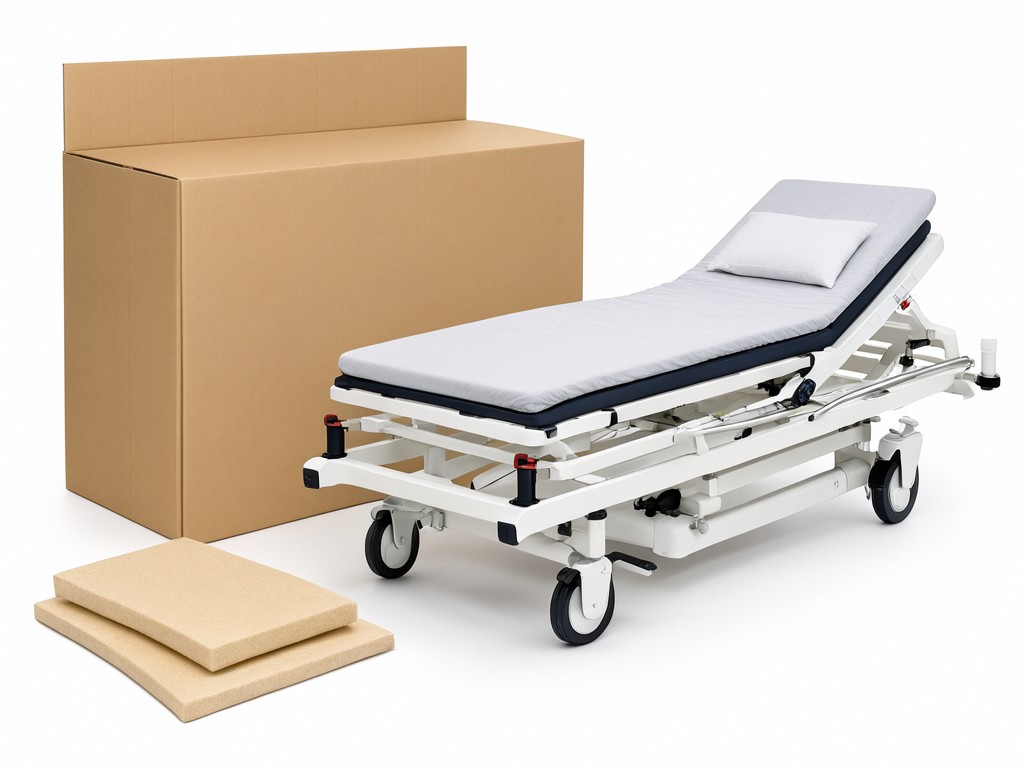
Each bed is shrink‑wrapped, placed on a fumigated pallet, and secured with corner boards. Four units fit a standard 40‑ft high‑cube container; a 20‑ft container holds two units. Packaging drawings are supplied with the first‑article pack.
Ready to finalize artwork and branding for your private‑label programme?
Submit artwork for review