Custom electric hospital beds with turn over function and commode Factory - Bulk Supply and Specification Guide
What This Product Is and Where It Fits
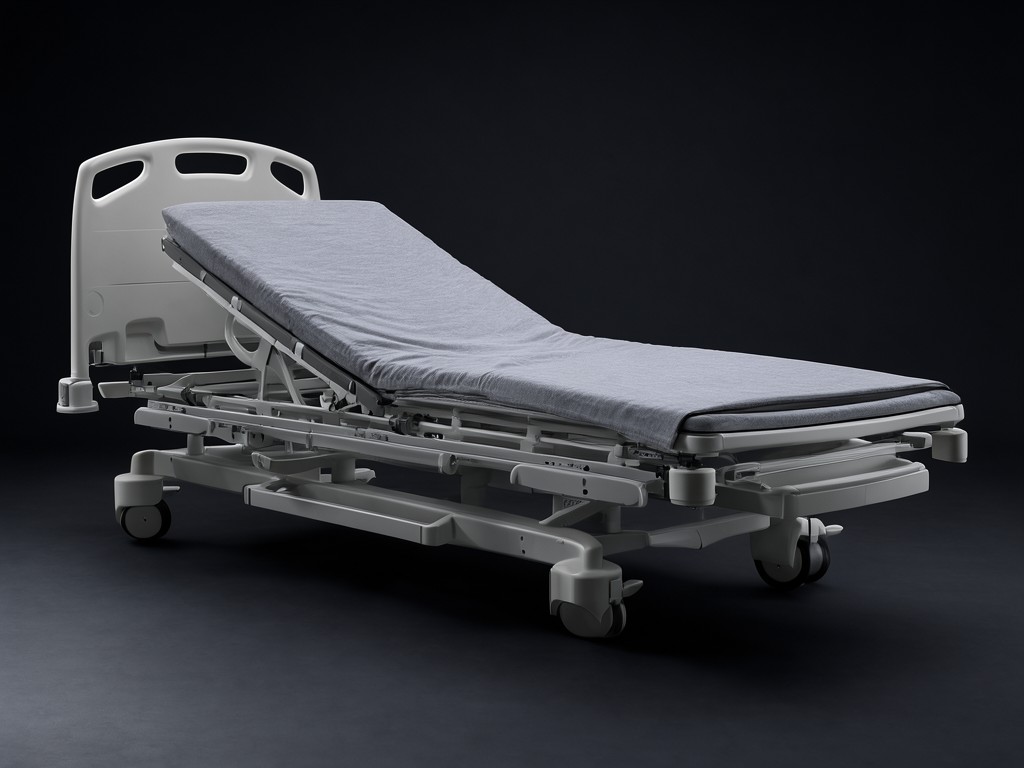
The platform combines a motorised profiling frame, a powered lateral turn‑over mechanism, and an integrated commode aperture that can be sealed when not in use. Buyers typically specify a 900 mm wide sleeping surface, a 250 kg safe working load, and a 30° turn‑over angle to meet pressure‑redistribution protocols.
- Acute‑care wards that need rapid patient repositioning without manual handling.
- Long‑term facilities where incontinence management and pressure relief are combined in a single bed.
- Home‑care agencies that require a compact footprint and battery backup for power‑outage resilience.
Comparing Two Standard Configurations
Configuration A – Standard Steel Frame
Frame: 2 mm cold‑rolled steel, powder‑coat RAL 9016.
Motor: 24 V DC, 150 W, dual‑actuator profiling.
Turn‑over: 30°, mechanical limit switches.
Commode: Removable pan, stainless‑steel rim.
Weight: 115 kg; packaging: 1 pallet, 1.2 m³.
Configuration B – Lightweight Aluminium Frame
Frame: 3 mm 6063‑T5 aluminium, anodised clear.
Motor: 24 V DC, 120 W, single‑actuator with gear reduction.
Turn‑over: 30°, electronic position feedback.
Commode: Integrated moulded pan, sealed when closed.
Weight: 92 kg; packaging: 1 pallet, 1.0 m³.
Configuration A favours durability in high‑traffic wards; Configuration B reduces freight cost and eases manual handling for home‑care deployments.
Requirements by Buyer Segment
Club or academy purchasing managers prioritise repeatable turn‑over timing and a documented service‑interval schedule; they often request a 5‑year spare‑parts guarantee.
Retail buyers focus on finish consistency across colour batches and on packaging that meets shelf‑ready standards; they typically ask for a master‑carton label template and a barcode‑compatible serial number.
Private‑label buyers need a clear tooling‑ownership clause, the ability to apply custom branding on the headboard, and a defined first‑article inspection (FAI) protocol before volume release.
Quality Control and Batch Consistency
Critical rule: turn‑over angle must stay within ±2° across the entire lot; deviation beyond this triggers a full‑lot re‑run.
Incoming steel and aluminium are verified for yield strength and thickness using ultrasonic gauging. Each motor undergoes a 10 000‑cycle endurance test at rated load. The commode seal is pressure‑tested at 0.5 bar for 30 seconds. Final assembly includes a functional run‑through of profiling, turn‑over, and commode locking, with data logged to the batch record.
Capacity, Tooling and Scheduling
Monthly capacity
1 200 units (steel) / 1 500 units (aluminium)
Tooling lead time
6 weeks for new frame extrusion; 3 weeks for commode mould
Standard MOQ
50 units per configuration
Typical lead time
8 weeks from PO to first shipment
Tooling is amortised over the first 2 000 units; buyers who commit to 1 000‑unit annual volumes can negotiate a reduced per‑unit tooling surcharge.
Care, Storage and Service Life
Frames tolerate routine cleaning with quaternary ammonium solutions; avoid chlorine‑based agents on anodised aluminium to prevent pitting. Motors are sealed to IP66; lubrication points are accessed via removable covers and require a synthetic grease recharge every 12 months. The commode pan is autoclavable at 121 °C for 20 minutes. Stored flat on pallets, beds retain dimensional stability for up to 24 months in a climate‑controlled warehouse (15‑25 °C, 40‑60 % RH). Expected service life is 10 years or 30 000 turn‑over cycles, whichever occurs first.
Finish and Colour Options
| Finish | Colour Code | Application | Lead Time |
|---|---|---|---|
| Powder coat | RAL 9016 (white) | Standard ward beds | 2 weeks |
| Powder coat | RAL 7035 (light grey) | Home‑care models | 3 weeks |
| Anodised clear | N/A | Aluminium frame option | 2 weeks |
| Custom brand colour | Pantone matched | Private‑label programmes | 4 weeks |
Request a detailed quotation or schedule a first‑article review.
Contact our sales engineering team