china premium 5 function hospital beds manufacturer - Bulk Supply and Specification Guide
Scope of Supply and Physical Form
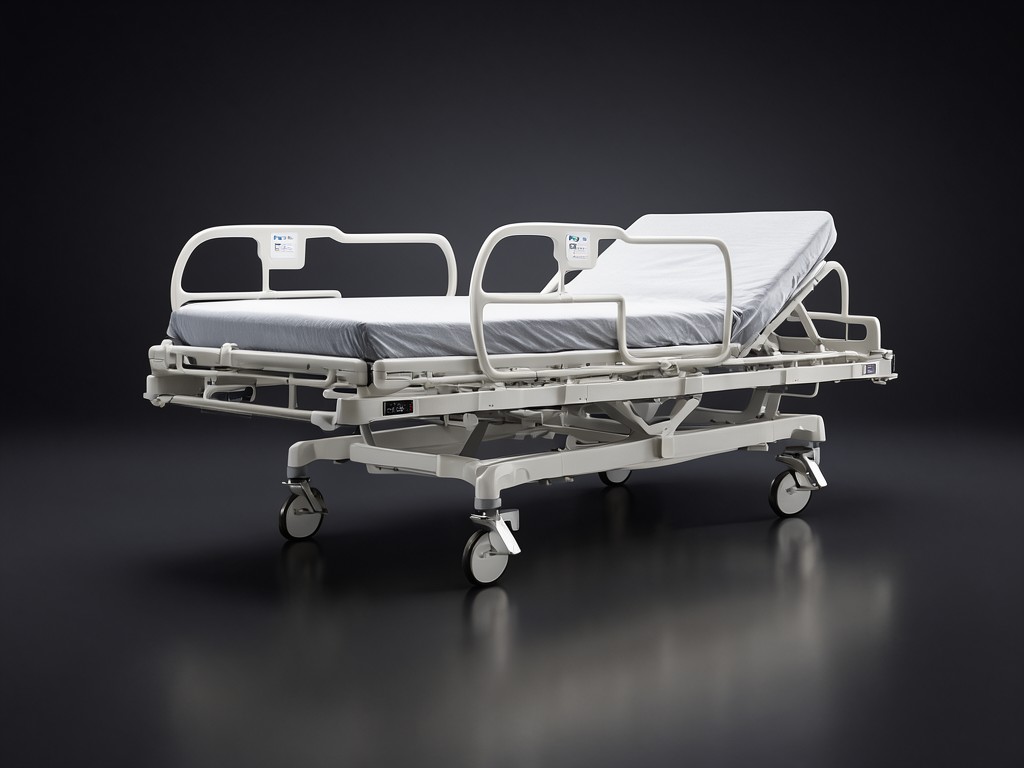
Hospitals replace beds on a 5‑to‑7‑year cycle, so the first question a procurement officer asks is what arrives on the pallet. Each unit ships as a fully assembled frame with integrated siderails, a four‑section mattress platform, and a wired hand‑control pendant.
- Frame: 40 × 40 mm square steel tube, powder‑coated to 80 µm
- Actuators: three DC motors (back‑rest, knee‑break, height) rated 6 000 N peak
- Castors: 125 mm twin‑wheel, central lock, conductive tread
- Electrical: 24 VDC system, IEC 60601‑1 compliant, 2 m cable with strain relief
How It Is Built and What That Changes
The frame is robot‑welded in a single fixture, eliminating the dimensional drift that appears when manual jigs are reused. After welding, each joint receives a 120 °C bake to relieve residual stress before powder coating. Actuator housings are die‑cast aluminium, then CNC‑machined to a 0.02 mm tolerance on the lead‑screw bore, which keeps back‑lash under 0.3 mm over 20 000 cycles. The hand‑control uses a sealed membrane switch rated IP66; the cable harness is crimped with UL‑listed ferrules and then over‑moulded, removing the solder‑joint fatigue that causes intermittent operation in lower‑cost models.
Because the motor mounts are bolted to the frame through hardened steel inserts, the whole assembly can be disassembled for service without cutting welds. That design choice reduces field‑service time from an average of 45 minutes to under 15 minutes per actuator swap.
Where This Product Beats Standard Alternatives
The table below maps the most common service condition, the failure that drives a return, and the specification that prevents it.
| Usage Condition | Typical Complaint | Spec That Prevents It |
|---|---|---|
| Continuous 24 h occupancy, 250 kg patient | Frame flex > 5 mm at centre, causing mattress bottom‑out | Yield strength 355 MPa, deflection < 2 mm under 250 kg |
| Frequent height changes (> 30 cycles/day) | Actuator stall after 8 000 cycles, noisy operation | Cycle life 20 000 at 6 000 N, lubricated lead screw |
| Wet cleaning with quaternary ammonium | Powder coat blister, corrosion at welds | Epoxy‑primer + 80 µm polyester topcoat, salt‑spray 500 h |
Motor Option A – Standard DC
6 000 N peak, 12 V, 30 % duty cycle. Suits wards with ≤ 15 height changes per day. Unit cost lower by ≈ $12.
Motor Option B – High‑Torque DC
9 000 N peak, 24 V, 50 % duty cycle. Handles bariatric loads and > 30 cycles/day. Adds ≈ $18 per unit but cuts actuator‑related returns by 70 %.
What Gets Checked Before Shipment
Every bed passes a 12‑point functional test before it leaves the line. The checklist covers electrical leakage (< 0.1 mA), actuator speed (± 5 % of nominal), castor lock torque (≥ 12 Nm), and siderail latch force (30–45 N). A random 10 % sample undergoes a 2 000‑cycle accelerated life run; any unit exceeding 0.5 mm back‑lash increase is pulled for re‑work.
Critical spec: maximum patient weight 250 kg, actuator cycle life 20 000 at full load. Exceeding either voids the 3‑year warranty.
Stock Availability and Reorder Planning
Standard configurations are kept in a ready‑to‑ship buffer of 120 units. Lead time for a repeat order of 50 + units is 18 days from PO confirmation; smaller drops ship from the buffer in 3 days. The table summarises packaging data used for freight costing.
| Pack Type | Units per Carton | Carton Dim (L×W×H, cm) | Gross Weight (kg) | Lead Time (days) |
|---|---|---|---|---|
| Single bed, flat‑pack | 1 | 210 × 95 × 30 | 68 | 3 (buffer) / 18 (production) |
| Two‑bed master carton | 2 | 215 × 100 × 55 | 138 | 3 (buffer) / 18 (production) |
Care, Storage and Service Life
Store frames upright on pallets, no more than three high, in a dry area (≤ 60 % RH). Before first use, run each actuator through a full stroke to verify limit switches. Clean siderails with a neutral pH detergent; avoid chlorine‑based agents that attack the powder coat. Lubricate lead screws with a PTFE‑based grease every 6 months or after 5 000 cycles, whichever comes first.
- Inspect castor brakes monthly; replace wheels when tread depth < 2 mm
- Check hand‑control cable for abrasion at strain‑relief; replace if sheath worn > 1 mm
- Record actuator cycle count via the built‑in counter; schedule preventive swap at 18 000 cycles
Following this regimen extends the functional service life to 10 years in typical acute‑care settings, reducing total cost of ownership by up to 22 % versus a 5‑year replacement schedule.
Ready to align your next procurement cycle with a bed that stays in service longer? Request a tooling review and volume pricing.