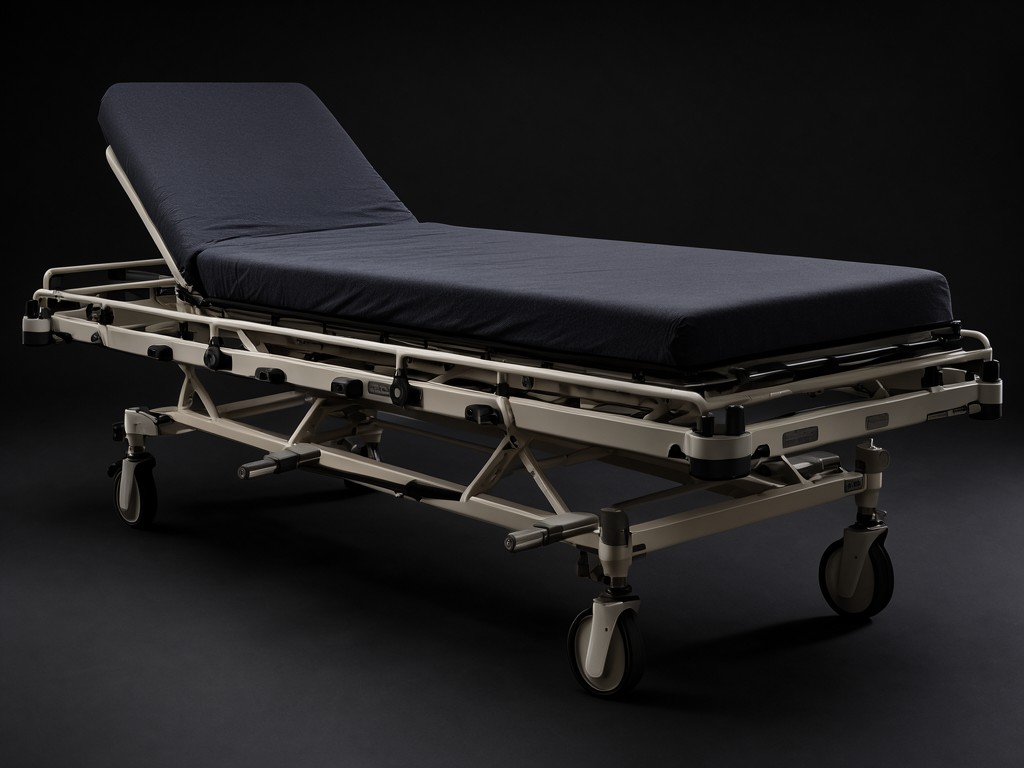
Specifying Wholesale double crank hospital bed with mattress for sale for Wholesale and OEM Orders
Design Constraints Behind the Specification
| Parameter | Typical Range | Impact on Procurement |
|---|---|---|
| Safe working load | 150–180 kg (depends on frame gauge) | Higher load rating adds 2–3 kg to unit weight, affecting freight cost |
| Overall width | 90–100 cm | Narrower width eases corridor navigation but reduces mattress surface |
| Crank travel (head/foot) | 0–70° / 0–30° | Extended travel requires longer crank arms, increasing assembly time |
| Mattress thickness | 12–15 cm | Thicker foam improves pressure redistribution but raises overall height |
The interface between the crank mechanism and the frame determines how much torque the operator must apply. A 2 mm increase in crank arm length reduces required force by roughly 15 % but adds 0.4 kg to the assembled bed. Buyers targeting low‑effort operation for elderly care typically specify the longer arm, while high‑turnover wards accept the shorter version to keep unit weight under 45 kg.
Comparing Two Standard Configurations
Standard Foam Mattress
Density 35 kg/m³, 12 cm thick, covered with a waterproof PU‑coated fabric. Suitable for short‑stay wards where turnover is high and cleaning cycles are frequent. The foam retains 90 % of its initial indentation force deflection after 500 cycles.
Pressure‑Redistribution Mattress
Multi‑layer viscoelastic core, 15 cm total height, topped with a breathable stretch‑knit cover. Designed for long‑term care where patients remain immobile for weeks. The top layer limits peak interface pressure to below 30 mmHg in standard testing.
Choosing between them is a cost‑versus‑clinical‑outcome decision. The foam option adds roughly US$12 per unit to the bill of materials; the viscoelastic version adds US$38 but can reduce pressure‑injury incidence, which many procurement policies reward with lower total cost of ownership.
Matching the Product to the Buyer's Need
Specification lock‑in occurs after the buyer approves a 2D drawing set and a physical pre‑production sample. Any change to crank arm length, mattress density, or side‑rail mounting points after that point incurs a tooling surcharge of 5–8 % of the order value.
Private‑label buyers typically provide a brand‑specific colour palette for the powder‑coat finish and a logo placement drawing for the headboard. The factory runs a first‑article inspection against those drawings before releasing the full batch.
Distributors who resell under their own SKU often request a generic “white‑label” configuration: standard grey frame, no logo, and the foam mattress. This configuration keeps the bill of materials stable across multiple market regions.
Usage Scenarios and Buyer Segments
Public‑hospital procurement offices order in lots of 200–500 units per quarter, requiring compliance with IEC 60601‑2‑52 for electrical safety (even though the bed is manual, the standard covers mechanical hazards). They also demand a 5‑year spare‑parts guarantee for crank gears.
Long‑term‑care chains purchase 50–100 beds per facility rollout, prioritising the pressure‑redistribution mattress and a quick‑release side‑rail system that speeds patient transfers.
Home‑care distributors buy in smaller batches (10–30 units) but request a compact packaging footprint (fold‑flat frame) to reduce last‑mile shipping volume.
Segment-Specific Requirements
- Public tenders: documented load‑test report for each batch, traceable heat‑lot numbers on frame steel.
- Private label: custom colour swatch approval, logo artwork in vector format, minimum order 100 units per colour.
- Distributor stock: standard grey finish, foam mattress, pre‑assembled crank handles, palletised 4‑unit packs.
- Home‑care: optional fold‑flat kit, lightweight caster set (75 mm diameter), instruction sheet in local language.
How Consistency Is Held Across Batches
Every production run starts with a first‑article inspection that measures frame diagonal tolerance (±1.5 mm), crank torque (2.5 Nm ±0.2 Nm), and mattress indentation force deflection (±5 %). A statistical process control chart tracks these three critical dimensions across the run; any point outside 2σ triggers a hold and root‑cause review.
Powder‑coat adhesion is verified by a cross‑hatch test on 5 % of frames per shift. Crank gear wear is simulated on a 10 000‑cycle rig; gears must show less than 0.05 mm tooth flank wear to pass.
Mattress foam density is sampled from each slab batch; a 10 % deviation from the target 35 kg/m³ results in a re‑mix before cutting.
Stock Availability and Reorder Planning
Standard grey frames with foam mattress are kept in a rolling safety stock of 150 units, allowing a 2‑week lead time for orders up to 200 units. Custom colour or pressure‑redistribution configurations are made‑to‑order; typical lead time is 45 days from drawing approval to FOB shipment.
Reorder points are calculated on a 90‑day consumption forecast. Buyers who share their quarterly demand plan receive a 5 % price buffer on the next PO.
Ordering, Tooling and Lead-Time Questions
What is the minimum order quantity for a custom powder‑coat colour?
100 units per colour. Below that, the setup cost for the colour line is amortised into a surcharge.
Can the crank arm length be altered after the first article is approved?
Any post‑approval geometry change requires a new crank‑arm forging die and a 5–8 % tooling surcharge on the order value.
What documentation accompanies each shipment?
Packing list, certificate of conformity for load rating, material test report for frame steel, and mattress foam density sheet. All documents are provided in English; translated versions are available on request.
How are freight dimensions calculated for the fold‑flat kit?
The folded frame measures 100 × 30 × 20 cm per unit; four units per pallet (120 × 100 × 100 cm). The mattress ships vacuum‑compressed in a separate carton (90 × 20 × 15 cm).
Ready to Align Specifications?
Share your drawing pack, target price, and volume forecast. We’ll return a detailed quotation, sample schedule, and a first‑article inspection plan within three business days.
Start a project discussion