Specifying china one crank manual hospital bed with mattress Company for Wholesale and OEM Orders
What This Product Is and Where It Fits
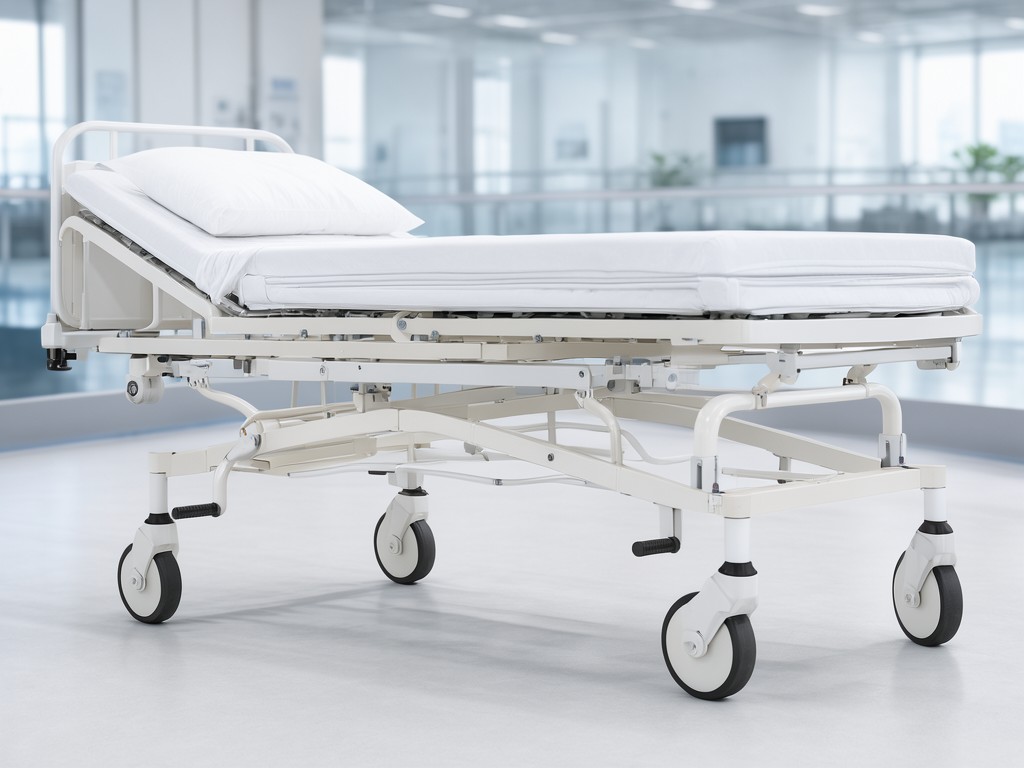
Material choice starts with the conditions the product will meet: a welded steel frame, epoxy powder coating, a single crank mechanism for back-rest elevation, and a high-density foam mattress with a waterproof, wipeable cover. This configuration targets general ward use in public hospitals, private clinics, and long-term care facilities where electric beds are not budget-justified.
- Frame: 40 mm × 40 mm × 1.5 mm rectangular steel tube, fully welded, load-rated to 250 kg static.
- Crank: folded steel handle, self-locking worm gear, 12 turns for 0–75° back-rest articulation.
- Mattress: 120 mm thick, 35 kg/m³ polyurethane foam core, PVC-coated polyester cover, welded seams.
- Casters: 125 mm diameter, twin-wheel, central locking via pedal on two corners.
Lot-to-lot consistency on crank torque and frame flatness is the single biggest driver of reorder rate. A 0.5 Nm drift in crank effort or a 2 mm bow in the side rail triggers returns in institutional tenders.
The Problem Buyers Keep Paying For
Cost and durability pull in opposite directions once the crank mechanism is cost-reduced. Thinner gear teeth save 0.3 kg per bed but wear past the self-locking threshold at 8,000 cycles instead of the specified 20,000. Frame coating thickness dropped from 80 µm to 50 µm to hit a price point; salt-spray resistance falls from 500 h to 200 h, and rust appears at weld seams within 18 months in humid wards. Mattress foam density variance of ±3 kg/m³ changes indentation force deflection by 15 %, leading to pressure-injury complaints and rejected batches.
Buyers report three failure modes that never appear in catalog specs: crank handle fracture at the weld, caster stem bending under dynamic load, and mattress cover delamination at the welded seam after 30 chlorine cleanings.
Insist on crank cycle test data (20,000 cycles at 250 kg) and salt-spray reports per ASTM B117 before approving a new lot. Without them, you are buying the next warranty claim.
What the Design Has to Balance
The table below consolidates the material and finish decisions that affect unit cost, service life, and lot repeatability. Each row represents a choice the factory makes per order; the right column shows the typical impact on the buyer’s total cost of ownership.
| Component / Parameter | Standard Spec | Upgrade Option | Finish / Colour Options | TCO Impact |
|---|---|---|---|---|
| Frame tube | 40×40×1.5 mm Q235 | 40×40×2.0 mm Q345 | Epoxy powder, RAL 9016 / 7035, 80 µm min | +12 % unit cost, +5 yr corrosion life |
| Crank gear | Stamped steel, case-hardened | Forged 45# steel, induction hardened | Zinc-nickel plating, 12 µm | +8 % unit cost, 2.5× cycle life |
| Mattress foam | 35 kg/m³ PU, 120 mm | 40 kg/m³ PU + 20 mm visco topper | PVC cover, white / light blue, welded seam | +15 % unit cost, 30 % lower peak pressure |
| Casters | 125 mm twin PP, central lock | 150 mm twin TPR, central + directional lock | Grey non-marking, sealed bearings | +5 % unit cost, quieter, floor protection |
Usage Scenarios and Buyer Segments
Where chlorine, sweat or UV exposure is routine, the standard spec survives 24 months; the upgraded coating and TPR casters push that to 5 years. Private-label buyers for national health ministries specify the upgraded crank and foam to meet tender clauses on maintenance intervals. Distributors serving regional clinic networks often stay with standard frame and crank but require the upgraded casters to protect vinyl flooring. Emergency field hospitals need the lightest configuration (standard everything) and accept a 12-month replacement cycle.
- Public hospital tender: upgraded frame coating, forged crank, standard foam, TPR casters.
- Private clinic chain: standard frame, forged crank, upgraded foam, TPR casters.
- Distributor stock: standard frame, stamped crank, standard foam, PP casters (lowest landed cost).
- Field hospital NGO: standard frame, stamped crank, standard foam, PP casters, flat-pack packaging.
Export Packaging and Handling Protection
Frames are nested two-high on steel stillages, each bed wrapped in 100 µm PE stretch film with corner protectors on crank handles. Mattresses ship compressed in vacuum bags (70 % volume reduction) inside 5-ply corrugated cartons, 4 per master carton. Stillages are strapped into 40‑ft HC containers; maximum stack height 2.2 m to avoid crank deformation. Humidity indicator cards and desiccant packs (2 kg per stillage) are mandatory for sea freight >30 days. Each stillage carries a QR-coded label linking to the mill certificate, coating report, and crank cycle test PDF.
Do not double-stack stillages in the warehouse. The 1.5 mm frame tube will permanently deflect at the crank boss under 400 kg point load, causing misalignment that cannot be reworked.
Ordering, Tooling and Lead-Time Questions
-
Confirm crank spec: stamped vs forged gear? Forged adds 10 days for die setup but cuts warranty claims by 80 %.
- If forged, approve gear tooth profile drawing before heat-treat.
- Require 20,000-cycle test report from the same heat lot.
-
Lock frame coating thickness: 80 µm minimum, measured at three points per side rail.
- Salt-spray report (ASTM B117, 500 h) per production lot.
- Colour match to RAL 9016 ±1 ΔE; keep master panel for next order.
-
Mattress foam density: specify 35 or 40 kg/m³; verify with 50 mm core sample per 500 units.
- Cover weld seam peel test ≥ 30 N/cm after 30 chlorine cycles.
- Compression set ≤ 10 % after 22 h at 70 °C.
-
Caster selection: PP for lowest cost, TPR for noise-sensitive floors.
- Dynamic load test 150 kg × 10,000 cycles on 3° incline.
- Central lock engagement force ≤ 25 N.
-
Packaging configuration: stillage count per container, vacuum bag vs loose mattress.
- Desiccant quantity per stillage for destination humidity.
- QR label data fields: PO, lot, test report URLs.
- Lead-time split: 25 days for standard spec, +10 days per upgraded component (forged crank, upgraded foam, TPR casters). Sample approval adds 7 days before mass production.
- MOQ per configuration: 50 units for standard, 100 units for any upgraded component to justify setup.
Ready to Lock In Specs and Lead Times?
Send us the configuration choices from the decision tree above. We’ll return a detailed quotation, sample plan, and lot-testing protocol within 48 hours.
Start Project Discussion