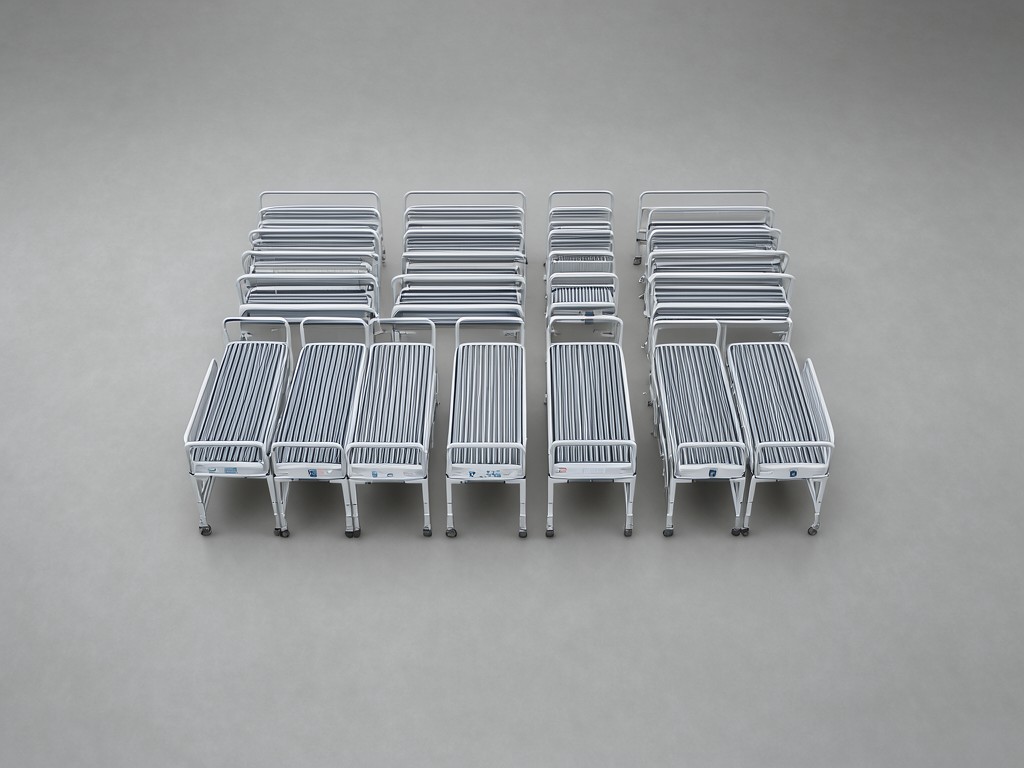
Specifying china general ward manual hospital beds manufacturer for Wholesale and OEM Orders
Key trade‑off: frame gauge versus crank durability determines both unit cost and service‑life consistency across high‑volume wards.
Total cost of ownership shifts once returns are counted; tooling amortisation decides the break‑even volume; replacement rate, not unit price, drives the procurement decision.
Scope of Supply and Physical Form
The supply envelope covers a welded steel frame, powder‑coated finish, manual crank mechanism, and a two‑section mattress platform. Each unit ships flat‑packed in a single carton to minimise freight volume.
The Problem Buyers Keep Paying For
Frequent crank‑handle fatigue and frame distortion after 12‑month cycles generate warranty claims that exceed the original margin. The root cause is often underspecified tube wall thickness combined with a low‑cycle crank gear set.
When a buyer selects the cheapest gauge to hit a target FOB price, the resulting uptime loss can add 15‑20 % to the effective cost per bed over a three‑year horizon.
Material Options and Their Trade-offs
Two frame steel grades dominate the market: Q235B (≈ 2.5 mm wall) and Q345B (≈ 3.0 mm wall). The higher grade adds roughly 1.2 kg per unit but raises the crank‑cycle rating from 30 k to 55 k cycles.
- Q235B – lower tooling cost, faster stamping, suited for orders below 500 units.
- Q345B – higher die wear, longer press time, justified when annual volume exceeds 1,000 units.
Size, Weight and Specification Range
Standard ward dimensions are 2000 mm × 900 mm × 500 mm (L × W × H). Weight ranges from 45 kg (Q235B) to 48 kg (Q345B). Crank handle torque is calibrated at 12 Nm for smooth operation under load.
| Parameter | Value |
|---|---|
| Carton dimensions (L × W × H) | 2100 mm × 950 mm × 150 mm |
| Gross weight per carton | 48 kg (Q345B) / 45 kg (Q235B) |
| Units per pallet | 4 cartons (2 × 2 stack) |
| Pallet size | 1100 mm × 1100 mm × 1200 mm |
Matching the Product to the Buyer's Need
Procurement teams targeting a 5‑year replacement cycle should specify Q345B frames and a 55 k‑cycle crank set; the incremental tooling cost is amortised within the first 800 units. For pilot projects or short‑term tenders, Q235B with a 30 k‑cycle crank keeps the upfront FOB below the threshold while still meeting basic regulatory load tests.
Care, Storage and Service Life
Store flat‑packed cartons in a dry environment (≤ 60 % RH) to prevent powder‑coat blistering. Inspect crank gear teeth every 6 months; lubricate with a light PTFE spray to maintain torque consistency. Expected service life: 7 years for Q345B, 4 years for Q235B under typical ward occupancy.
Ready to align specifications with your volume plan?
Request a quotation review