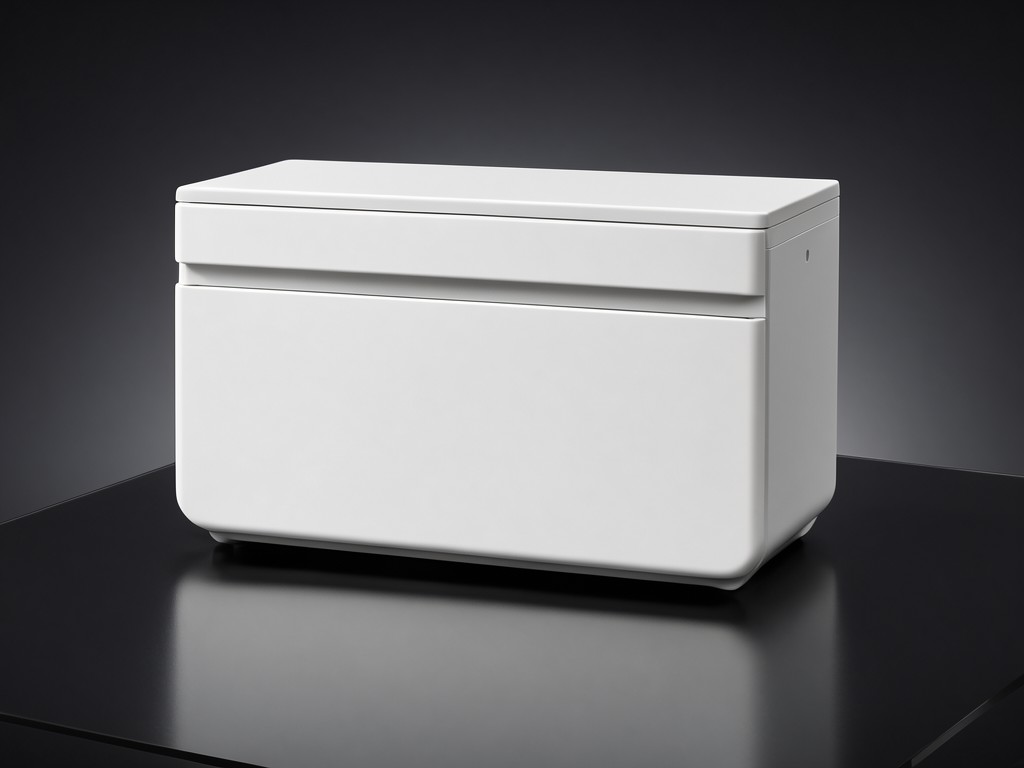
Specifying Factory Direct hospital bedside medicine cabinet supplier for Wholesale and OEM Orders
Cheaper stock options fail at the worst point in the season, leaving procurement teams scrambling for replacements.
When a bedside cabinet is specified solely on unit price, the hidden costs appear in hinge fatigue, coating delamination, and lock misalignment after a few thousand door cycles. A cabinet that sags 2 mm under a 5 kg load forces nursing staff to work around misaligned shelves, and a powder‑coat that chips after routine disinfectant wipes creates a corrosion path that shortens service life to under 18 months. The total cost of ownership is driven by replacement rate, not the invoice price.
Where Cheaper Alternatives Fall Short
The most common failure is hinge fatigue after 30,000 cycles.
Budget cabinets often use 2 mm cold‑rolled steel with a single‑coat epoxy finish. Under repeated opening, the hinge plates deform, causing door sag that exceeds the 1.5 mm tolerance required for proper latch engagement. In high‑turnover wards, doors see 150 cycles per day; a 30,000‑cycle rating is reached in under seven months. Coating adhesion tests on these units show 30 % loss after 200 h salt‑spray exposure, while a properly pre‑treated, double‑coat system retains >90 % adhesion. Lock mechanisms stamped from low‑carbon steel strip develop play after 10,000 actuations, leading to insecure storage of controlled substances.
Specification Range and Customisation Limits
- Select frame material (cold‑rolled steel 1.2 mm for standard wards; 304 stainless 1.0 mm for high‑humidity or coastal sites)
- Standard steel → powder coat 80 µm, 500 h salt spray
- Stainless → electropolished, no coating required
- Define door configuration (single hinged, double hinged, sliding) based on clearance and infection‑control protocol
- Hinged doors need 110° swing clearance
- Sliding doors eliminate swing space but require track cleaning
- Choose lock type (cam lock for low‑risk, electronic RFID for controlled substances) and verify cycle rating ≥100,000
- Confirm interior shelf adjustability (32 mm pitch, load rating 15 kg per shelf)
Specification callout: Cabinets destined for ICU or isolation rooms must meet IP44 splash resistance; specify sealed hinge caps and gasketed door frames. Failure to request this adds a retrofit cost of 12‑15 % per unit.
Standard Grade
- 1.2 mm CR steel, epoxy‑polyester coat
- Hinge rated 50,000 cycles
- Cam lock, 3‑point latch
Heavy‑Duty Grade
- 1.0 mm 304 stainless, electropolished
- Hinge rated 150,000 cycles
- RFID electronic lock, audit trail
Segment-Specific Requirements
| Parameter | Standard Grade | Heavy‑Duty Grade | Typical Range |
|---|---|---|---|
| External dimensions (W×D×H) | 600×450×1800 mm | 600×500×1850 mm | ±10 mm per dimension |
| Weight (empty) | 38 kg | 45 kg | 35‑50 kg |
| Door cycle rating | 50,000 cycles | 150,000 cycles | ≥50,000 cycles |
| Shelf load capacity | 15 kg per shelf | 25 kg per shelf | 10‑30 kg |
| Corrosion resistance (salt spray) | 500 h | 1000 h (stainless) | 500‑1000 h |
| IP rating | IP20 (standard) | IP44 (sealed) | IP20‑IP44 |
What Gets Checked Before Shipment
Every production lot passes a dimensional audit against the approved drawing.
A calibrated CMM verifies critical points: frame squareness ±0.5 mm, door gap 2.0±0.3 mm, shelf pin engagement depth. Hinge torque is measured at 1.2 Nm ±0.1 Nm; any deviation triggers a re‑work. Coating adhesion follows cross‑hatch test (ASTM D3359) with a minimum 4B rating. Salt‑spray samples run 240 h for standard grade, 480 h for heavy‑duty. Lock actuation is cycled 5,000 times on a test rig; latch release force must stay within 8‑12 N. Packaging is drop‑tested from 750 mm per ISTA 3A to confirm corner protection.
Care, Storage and Service Life
Routine cleaning with 0.5 % sodium hypochlorite does not degrade the powder coat if rinsed within 5 min.
Store cabinets upright on pallets with 30 mm foam separators; stacking more than two high risks frame distortion. Lubricate hinge pins annually with PTFE grease to maintain torque spec. Expected service life: 10 years for standard grade in general wards, 15 years for heavy‑duty in ICU or coastal facilities. Replace door gaskets every 3 years to preserve IP rating. Track shelf deflection; any permanent set >2 mm indicates overload history and warrants shelf replacement.
Ordering, Tooling and Lead-Time Questions
- What is the MOQ for a custom colour? 50 units per colour; tooling amortisation adds $12/unit below 200 pcs.
- Can we mix hinge types in one order? Yes, but each hinge variant requires a separate fixture; adds 5 days to lead time.
- What artwork files are accepted for silk‑screen branding? Vector AI or EPS, 300 dpi minimum; colour matching to Pantone Solid Coated.
- How is freight configured for container loading? Cabinets ship flat‑packed on 1200×1000 mm pallets, 4 per 40‑ft HC; weight per pallet ≤800 kg.
- What is the typical lead time after sample approval? 35‑45 days for standard grade, 45‑55 days for heavy‑duty with RFID locks.
Ready to finalize specifications?
Submit your drawings and volume forecast for a detailed quotation and sample schedule.
Request a quote and artwork review