Specifying Factory Direct single electric medical hospital beds Manufacturer for Wholesale and OEM Orders
Design Constraints Behind the Specification
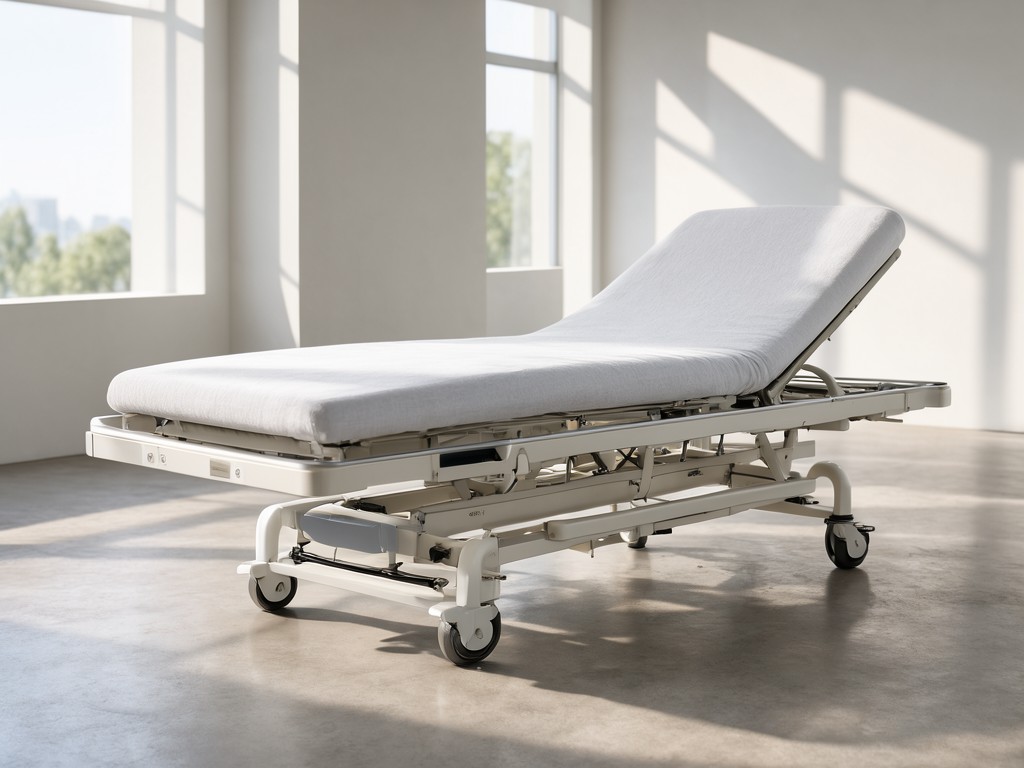
Key constraint: the bed frame must support a 250 kg static load while keeping the overall height under 650 mm for standard ward clearance. This drives the choice of 2 mm cold‑rolled steel tubing and a reinforced actuator mounting plate.
Replacement rate, not unit price, determines the real cost of a program. A frame that bends after 12 months forces a full‑ward swap, adding freight and labor that dwarf the original purchase. The design therefore locks the actuator stroke to 300 mm and uses a dual‑limit switch to prevent over‑travel, which is the most common failure mode in high‑turnover facilities.
Material Options and Their Trade-offs
Total cost of ownership shifts once returns are counted. The two primary frame alloys are:
Grade A – 2 mm Cold‑Rolled Steel (Q235)
Yield strength 235 MPa; weight 18 kg per frame. Lowest material cost, but requires a powder‑coat thickness ≥ 80 µm to meet 500‑hour salt‑spray. Best for budgets under $120 /unit.
Grade B – 2 mm High‑Strength Low‑Alloy (HSLA 350)
Yield strength 350 MPa; weight 16 kg per frame. Allows a 60 µm coat, saving 15 % on coating line time. Unit cost rises ≈ $15 but extends service life by 30 % in humid climates.
Tooling amortisation decides the break‑even volume: Grade A tooling spreads over 2,000 units, Grade B over 1,200 units because the higher‑strength die wears faster.
Option Comparison by Usage Level
| Parameter | Standard Ward (≤ 30 cycles/day) | High‑Turnover ICU (≤ 80 cycles/day) |
|---|---|---|
| Actuator duty cycle | 10 % (30 s on / 5 min off) | 30 % (30 s on / 1.5 min off) |
| Mattress platform thickness | 30 mm high‑density foam | 45 mm gel‑infused foam |
| Control interface | Wired handset, 2‑button | Wireless pendant, 4‑button with lockout |
The ICU column adds a sealed IP66 actuator and a battery backup that adds 1.2 kg but eliminates downtime during power loss.
Customisation Options and Their Limits
Branding is limited to a laser‑etched logo on the headboard (max 120 × 40 mm) and a colour‑matched powder coat from the RAL palette. Custom mattress dimensions require a new platform die; the minimum order for a new die is 500 units because the CNC set‑up cost is $4,800 and amortises at $9.60 per unit.
- Headboard logo – vector AI/EPS, 300 dpi minimum.
- RAL colour – provide code; tolerance ± 2 ΔE.
- Side‑rail length – 800 mm standard; 900 mm adds $4/unit for extra tubing.
Any change to the actuator mounting pattern voids the existing type test; a new test adds 3 weeks to lead time.
Who Uses It and Where It Matters
Public‑health procurement officers in regional hospital networks order 200–500 beds per tender. Private‑clinic chains buying 50–150 units need a 30‑day sample approval window. Emergency‑field hospitals require the battery‑backup ICU variant and flat‑pack crating for air freight. In each case the bed must survive 10,000 actuation cycles without drift in height accuracy (> ± 5 mm).
What Gets Checked Before Shipment
| Inspection Item | Method | Acceptance Criteria |
|---|---|---|
| Frame dimensional check | CMM ±0.2 mm | All critical lengths within ±1 mm of drawing |
| Actuator stroke & force | Automated test bench, 5 cycles | Stroke 300 ± 2 mm; force ≥ 1,200 N |
| Coating adhesion | Cross‑cut tape test (ISO 2409) | Rating 0 or 1 |
| Electrical safety | Dielectric withstand 1,500 V AC 1 min | No breakdown, leakage < 0.5 mA |
Failed units are segregated, re‑worked, or scrapped; the batch is released only when 100 % of sampled units pass.
Keeping Repeat Orders Supplied
A rolling forecast of 6 months lets the line keep a safety stock of 5 % of the annual volume in finished‑goods. The actuator sub‑assembly is the longest lead item (8 weeks), so we hold a buffer of 200 actuators per 1,000‑bed run. When a repeat PO exceeds the forecast by > 15 %, a fast‑track line can add 200 units in 3 weeks by pulling from the buffer and running a second shift on the welding cell.
Specification review: Send your drawing package and annual volume estimate to /contactus for a line‑capacity confirmation and a cost model that includes tooling amortisation.