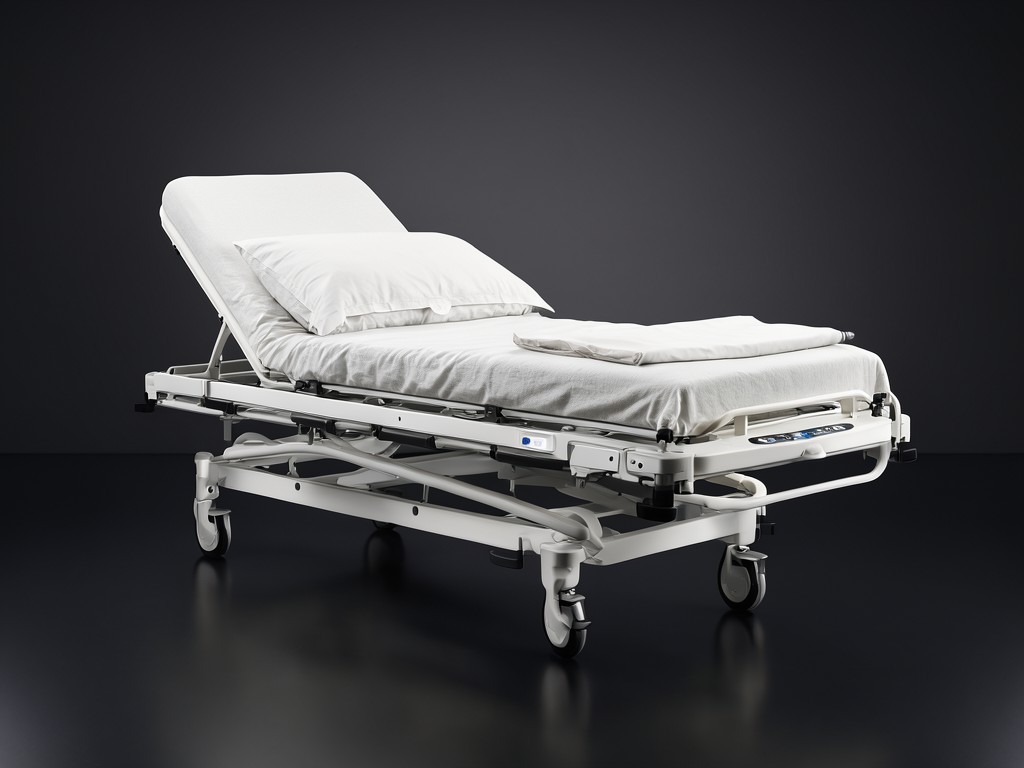
factory direct new electric nursing hospital bed for patients exporter - Bulk Supply and Specification Guide
Where Cheaper Alternatives Fall Short
The limiting factor is rarely the headline specification; it is the cumulative effect of low‑grade actuators, thin‑wall tubing, and minimal fatigue testing that shows up after a few months of daily height changes.
Buyers report motor whine that exceeds 55 dB in quiet wards, frame flex that lets the mattress shift during Trendelenburg, and battery packs that lose 30 % capacity before the first service interval.
A bed that meets the static load rating but uses a single‑motor drive will overheat when the care team cycles the back‑rest every 15 minutes for pressure relief.
Materials and Construction Trade-offs
Repeat loading drives the failure mode at the head‑end actuator mount; a welded 12 mm rectangular tube with 2.5 mm wall thickness keeps deflection under 3 mm at 300 kg, while a bolted 10 mm tube shows 7 mm after 10 k cycles.
Spec Guardrail: choose dual‑motor with thermal cut‑off ≥ 120 °C for high‑frequency repositioning; it adds ~2 kg but eliminates the overheating complaint that drives warranty claims.
Side‑rail material matters: ABS‑reinforced nylon survives 100 k latch cycles, whereas standard polypropylene cracks at 30 k in bariatric units.
Construction Method and Its Effect on Consistency
Fatigue appears at the stress concentration where the actuator bracket meets the frame; a fully welded sub‑assembly inspected by ultrasonic scan reduces batch‑to‑batch variation to ±0.2 mm on critical hole centres.
Modular bolt‑on brackets speed line changeover but introduce a 0.5 mm tolerance stack that can misalign the CPR release lever, adding 0.3 s to release time.
Powder‑coat thickness of 80‑100 µm passes salt‑spray 500 h; thinner coats show rust at the wheel‑caster mounts within six months of coastal hospital deployment.
Specification Range and Customisation Limits
Configuration Matrix
| Clinical Use Case | Observed Failure Mode | Spec Guardrail |
|---|---|---|
| ICU continuous repositioning | Actuator overheating after 8 h | Dual‑motor with thermal cut‑off ≥ 120 °C |
| Long‑term care low‑height transfers | Frame flex causing patient slide | 12 mm rectangular tube, 2.5 mm wall, yield ≥ 350 MPa |
| Bariatric unit >250 kg | Side‑rail latch fatigue | Reinforced latch cycle tested 100k cycles |
| Emergency CPR release | Delayed release >3 s | Mechanical CPR lever <1.5 s release |
Customisation limits: voltage (110 V/220 V), mattress platform (foam, air, hybrid), side‑rail style (full, split, fold‑down), pendant type (wired, wireless), frame colour (RAL 9016, 7035, custom). MOQ for non‑standard colour is 50 units; lead‑time adds 15 days.
Setup, Use and Replacement Parts
Install the bed on a level floor; verify caster locks engage before first patient use. Actuator sync procedure: run full up/down cycle twice, then confirm control pendant reads 0 % and 100 % positions.
Battery pack replacement interval is 24 months or 500 cycles, whichever occurs first. Use only OEM‑spec 24 V 12 Ah lithium‑iron‑phosphate packs; third‑party packs void the 2‑year actuator warranty.
Side‑rail latch springs are field‑replaceable; keep a spare kit (part #SR‑LATCH‑KIT) on each ward cart to avoid downtime during high‑turnover periods.
Next Steps
Request a sample configuration that matches your clinical use case; we will ship a pre‑production unit with full test data for your validation team.