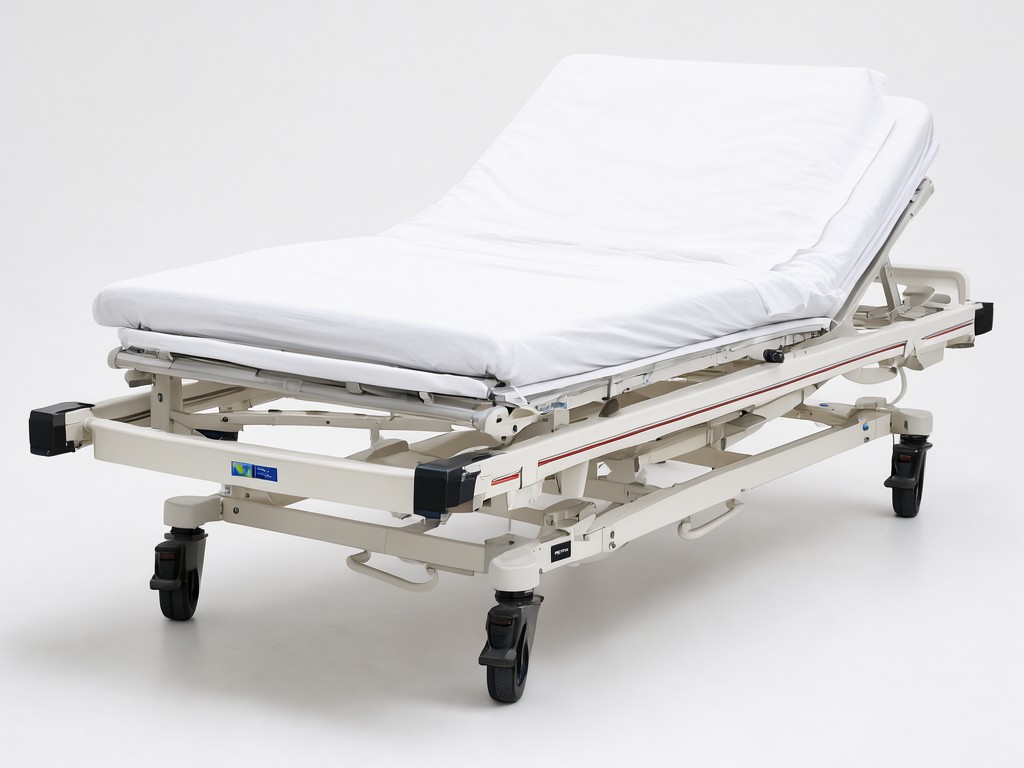
Direct Factory electric adjustable hospital beds Exporter - Bulk Supply and Specification Guide
Cheaper stock frames fail at the worst point in a repeat order cycle, usually after the first warranty claim lands. Buyers who price by unit cost alone discover the real cost when actuators seize or side rail welds crack under patient weight.
Design Constraints Behind the Specification
Patient weight and caregiver access set the hard limits on frame geometry. A bed rated for 200 kg safe working load needs thicker tube gauge and full-penetration welds at the headboard and footboard joints, which adds frame weight and changes how many units fit in a 40-foot container. The motor specification is secondary to the joint design because a weak pivot tears out under side load long before the actuator reaches its rated thrust.
Export packing usually means knock-down kits, so the joint design must tolerate repeated assembly without hole elongation or rail sag.
Duty cycle matches ward turnover
A 10 percent duty cycle motor overheats under continuous bedside adjustment; a 25 percent duty cycle unit adds cost but prevents thermal trip during patient repositioning. Select the actuator duty cycle to match the ward's daily cycle count, not the catalogue maximum.
What Actually Determines Performance
An electric bed moves through a linear actuator pushing or pulling the bed frame sections on a scissor or link mechanism. Thrust rating matters less than holding force once power cuts; a 6,000 N actuator that drops 20 mm under static load fails the bedside test. Gear type controls backlash: ACME screws tolerate side load better than ball screws in frame flex conditions, but ball screws run quieter and draw less current.
Handset cable fatigue is the most common field failure. The cable flexes at the entry point every time a nurse adjusts the head angle, and a poorly strain-relieved joint cracks inside six months.
Control box relay rating determines whether the bed lifts a patient plus mattress without tripping thermal protection during a full Trendelenburg cycle.
Size, Weight and Specification Range
Safe Working Load
180-450 kg depending on frame gauge and caster specification.
Height Range
Typically 280-780 mm from low entry to high caregiver position.
Backrest Angle
0-75 degrees on standard frames; rehab models may limit to 65 degrees.
Actuator Duty Cycle
10-25 percent; matched to ward turnover rather than catalogue maximum.
Lot-to-lot consistency drives reorder reliability. Overall length must hold within ±5 mm across a batch so headboards and side rails match without shimming, and frame weight drift beyond ±2 kg signals tube gauge variation.
| Configuration | Overall Length | Overall Width | Height Range | Backrest Angle | Safe Working Load | Frame Weight | Caster Diameter |
|---|---|---|---|---|---|---|---|
| General Ward | 2160-2200 mm | 980-1020 mm | 420-750 mm | 0-75° | 200-250 kg | 115-130 kg | 125-150 mm |
| Long-Term Care | 2130-2180 mm | 960-1000 mm | 380-720 mm | 0-65° | 180-220 kg | 105-120 kg | 100-125 mm |
| Bariatric | 2200-2250 mm | 1150-1250 mm | 450-780 mm | 0-70° | 300-450 kg | 150-180 kg | 150-200 mm |
| Low-Entry Rehab | 2100-2150 mm | 950-990 mm | 280-650 mm | 0-75° | 180-220 kg | 110-125 kg | 100-125 mm |
Option Comparison by Usage Level
Ward Duty - High Cycle
Ward-duty frames carry the highest daily cycle count. They use a 25 percent duty cycle actuator, 125-150 mm locking casters, and full-length side rails rated for 200-250 kg safe working load. The handset includes a caregiver lockout to prevent unintended patient adjustment. The trade-off is a heavier frame and fewer units per container.
Long-Term Care Duty - Low Cycle
Long-term care beds run fewer adjustments but remain under static load for extended periods. A 10-15 percent duty cycle actuator, 100-125 mm casters, and three-quarter side rails suit 180-220 kg safe working load. The lighter frame cuts freight cost per unit but is not suitable for high-turnover wards where actuators cycle ten times per shift.
Who Uses It and Where It Matters
General wards in district hospitals run the highest cycle count. Beds there are adjusted for meals, hygiene, and physiotherapy multiple times per shift, so the actuator and side rail pivots carry the load daily. The mattress platform must stay within entrapment gap limits when the head is raised, and the casters must roll under load across worn linoleum without swivel seizure.
Long-term care and nursing home beds run fewer adjustments but stay in position for weeks. The failure mode there is not motor burnout; it is frame flex at the weld joints and powder-coat chipping from daily chemical wiping.
Rehab units use low-entry frames that drop below 400 mm for patient transfer. The scissor mechanism must not bind at minimum height, and the handset needs a caregiver lockout so patients cannot self-adjust into unsafe positions.
- Acute ward: high cycle, frequent repositioning, infection-control cleaning
- Long-term care: static loading, chemical exposure, rail latch fatigue
- Rehab: low-height transfer, caregiver lockout, scissor bind at minimum height
Send frame drawings and branding artwork for a sample approval and MOQ quote.
Request artwork-and-branding-review