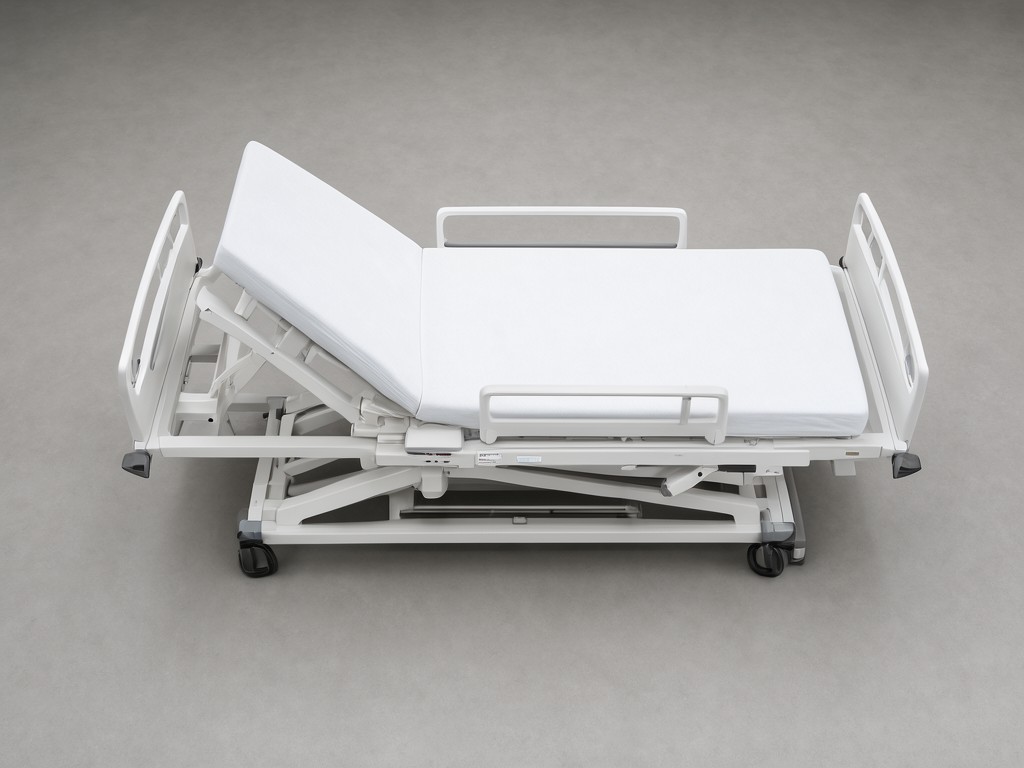
custom fully electric adjustable medical hospital bed supplier - Bulk Supply and Specification Guide
Where Cheaper Alternatives Fall Short
Procurement teams repeatedly report three failure clusters on budget beds: motor burnout before 18 months, caster seizure after floor chemical exposure, and control handset cable fracture at the strain relief. Each traces to a single spec compromise — undersized motor duty cycle, non-sealed caster bearings, or PVC-jacketed cable instead of polyurethane.
The build method decides whether a bed survives a 24/7 ICU schedule or fails during a seasonal surge. Motor windings rated for S3 10% duty cycle overheat when nurses run back-to-back Trendelenburg cycles. Caster housings without double ball races and sealed precision bearings bind after three months of quaternary ammonium disinfectant. Handset cables routed without internal strain relief snap at the connector — a failure that grounds the entire articulation system.
First-article tooling determines whether these failure points are engineered out or baked in. A 0.5 mm increase in frame wall thickness at the head-end lift point adds 1.2 kg per unit but eliminates the fatigue crack that appears at 14,000 cycles. That crack forces a full frame replacement — four hours of biomedical tech time plus bed downtime.
What the Design Has to Balance
Every electric hospital bed balances four competing constraints: safe working load (SWL) versus frame weight, articulation range versus mattress platform rigidity, IP rating versus service access, and motor torque versus acoustic signature. Push SWL from 250 kg to 300 kg and the frame gains 8 kg — exceeding single-person manual handling limits for installation crews. Extend the knee-break from 30° to 40° and the platform requires additional cross-bracing that reduces radiolucent window area.
ICU / High-Acuity Priority
- Continuous-duty motors (S3 25% minimum) for frequent repositioning
- Battery backup ≥ 60 cycles at full load
- IPX6 on all electronics for wash-down protocols
- Integrated scale system with ±0.5 kg accuracy
General Ward / Long-Term Care Priority
- S3 10% duty cycle sufficient for q2h turns
- Battery backup ≥ 20 cycles — covers power transfer
- IPX4 adequate for spray-and-wipe cleaning
- Manual CPR release lever — no scale integration
The spec sheet that ignores this split ships ICU beds to nursing homes (over-spec cost) or ward beds to step-down units (under-spec risk). Both generate complaints within the first quarter.
How It Is Built and What That Changes
Frame fabrication starts with 1.5 mm cold-rolled steel tube, laser-cut and robotically welded in a fixture that holds ±0.3 mm positional tolerance across all four articulation pivot points. Post-weld heat treatment relieves residual stress — skipping this step saves 45 minutes per frame but yields the 14,000-cycle crack at the head-end lift lug. Powder coat follows a zinc-phosphate pretreatment; 80 µm minimum dry film thickness passes 500-hour salt spray per ASTM B117. Thinner coats show white rust at caster mounts within 18 months.
Motor-gearbox units are 24 V DC permanent magnet with worm drive — self-locking eliminates holding current and prevents drift under load. Each unit undergoes 50,000-cycle endurance test at 110% rated torque before installation. Control electronics conform to IEC 60601-1 and IEC 60601-2-52; the PCB is conformal-coated (acrylic, 50 µm) and housed in a gasketed ABS enclosure rated IPX6. Handset cable uses 7-strand tinned copper with polyurethane jacket and moulded strain relief — tested to 10,000 flex cycles at 180° bend radius.
Mattress platform uses four-section design: fixed head, adjustable back (0–70°), thigh (0–30°), and calf (0–20°). Deck is perforated 1.2 mm steel with 60% open area — supports foam and air surfaces without sag. CPR release is single-lever, mechanical, accessible from both sides, tested to 5,000 actuations without lubrication.
Specification Range and Customisation Limits
| Parameter | Standard Range | Customisation Window | Tooling Impact |
|---|---|---|---|
| Safe Working Load | 250 kg / 300 kg | 200–350 kg in 25 kg steps | New frame fixture ≥ 300 kg |
| Back Rest Angle | 0–70° | 0–75° (requires longer actuator stroke) | Actuator bracket re-jig |
| Knee Break Angle | 0–30° | 0–40° (adds cross-brace) | Platform weld fixture change |
| Height Range | 400–800 mm | 350–850 mm (caster & lift column) | Column extrusion die |
| Caster Diameter | 125 mm / 150 mm | 100–200 mm (affects base height) | Caster horn weld jig |
| Control Interface | Wired handset + panel | Wireless, foot pedal, voice module | PCB layout + firmware |
| Mattress Platform | Perforated steel | X-ray translucent composite, integrated scale | Platform assembly line |
| Finish Colour | RAL 9016 / 7035 | Any RAL, antimicrobial additive optional | Powder batch — MOQ 50 pcs |
Customisation beyond the window requires new tooling — minimum 8-week lead time and 50-unit MOQ to amortise fixture cost. Colour changes under 50 units incur a €1,200 powder batch surcharge. Wireless control adds €85/unit and requires EMC re-test (IEC 60601-1-2) — budget 6 weeks for notified body scheduling.
Working as a Production Partner, Not a Catalogue Supplier
We do not hold finished-goods stock. Every order enters a configured build sequence: frame kit → powder line → motor/actuator sub-assembly → electronics integration → platform mating → final test → crate. This means your first shipment ships 6–8 weeks after drawing approval, but repeat orders pull from validated BOM with zero engineering lag.
OEM service scope: Your branding on head/foot boards (laser etch or silk-screen), custom control panel legend, mattress platform cut-outs for proprietary surfaces, and country-specific plug/voltage configuration. We maintain your approved BOM revision in our PLM — change orders require written sign-off and trigger first-article re-inspection on the affected sub-assembly only.
Private-label buyers receive full technical file (IEC 60601-1 test report, risk management file per ISO 14971, EMC test data, biocompatibility certificates for patient-contact materials) — ready for your MDR/510(k) submission. We do not share client names or project references; your regulatory file references our generic model designation with your brand applied.
Inspection Items and Test Methods
| Usage Condition | Typical Complaint / Failure | Preventive Specification |
|---|---|---|
| ICU — q1h repositioning, 24/7 | Motor thermal cutoff trips; back-rest drift under load | S3 25% duty cycle motor; worm-drive self-lock; thermal sensor with auto-recover |
| Ward — chemical disinfection 3×/day | Caster seizure; powder coat delamination at welds | Sealed precision bearings (2RS); zinc-phosphate + 80 µm powder; drain holes in caster horns |
| Transport — container stacking, 30°C/90% RH | Handset cable fracture; control board corrosion | PU jacket cable + moulded strain relief; conformal-coated PCB; desiccant in crate |
| Bariatric — 300 kg patient, frequent Trendelenburg | Frame fatigue at head-end lift lug; actuator bend | 2.0 mm frame wall at lift points; 8000 N actuator; FEA-validated 50k cycles |
| Emergency — CPR activation, power loss | CPR lever jam; battery dead; no flat position | Mechanical CPR lever (no electric); battery auto-test weekly; gravity-drop backup |
Every unit passes final test: 5-cycle full articulation under 110% SWL, leakage current < 100 µA (NC) / < 500 µA (SFC), ground continuity < 0.1 Ω, emergency stop < 2 s, CPR drop time < 3 s. Test data logged by serial number — traceable for 10 years.
Keeping Repeat Orders Supplied
We hold safety stock of long-lead components: motor-gearbox units (12-week lead), control PCBs (10-week), caster assemblies (8-week), and powder-coated frame kits (6-week). This covers 80% of repeat order configurations at 4-week turnaround from PO. Custom colours, wireless modules, or non-standard SWL revert to full 8-week cycle.
Blanket orders with monthly call-offs lock pricing for 12 months and reserve component allocation. Forecast accuracy ±20% avoids expedite fees. We ship in reusable steel crates (stackable, 4 beds per crate) — return freight credited on next invoice. Single-bed cartons available for distributed sites but add 15% packaging cost and 20% freight volume.
Warranty baseline: 3 years frame, 2 years motors/actuators, 1 year electronics and wear items (casters, handset cable). Extended to 5/3/2 with preventive maintenance contract — biomedical tech inspects annually, replaces casters and cable proactively, re-greases pivot points. Contract cost typically 4% of bed price per year.
Care, Storage and Service Life
Daily: wipe frame and panels with pH-neutral detergent (pH 6–8). Avoid chlorine > 500 ppm, phenolic, or quaternary ammonium > 0.5% — these attack powder coat and ABS gaskets. Weekly: inspect caster rotation, handset cable integrity, CPR lever free movement. Monthly: verify battery charge indicator, test all articulation functions under no load.
Storage: indoors, 5–35°C, < 75% RH. Stack crates max 3 high. Remove batteries if stored > 90 days — self-discharge below 10.5 V damages LiFePO₄ cells. Recharge to 50% every 6 months. Frame and platform tolerate -20°C to 60°C but electronics rated 0–40°C operating.
Design service life: 10 years / 50,000 articulation cycles at rated SWL. Motors rated 20,000 hours at S3 10% duty. Caster bearings 50 km travel. Control PCB 100,000 actuation cycles. Real-world replacement drivers: regulatory obsolescence (IEC 60601 edition changes), mattress platform compatibility shifts, and facility refurbishment cycles — not structural fatigue.
Request a Quotation Review
Send your specification sheet, volume forecast, and target delivery date. We return a configured BOM with unit cost, tooling amortisation (if any), lead time, and regulatory file checklist within 3 business days.
Start quotation review →