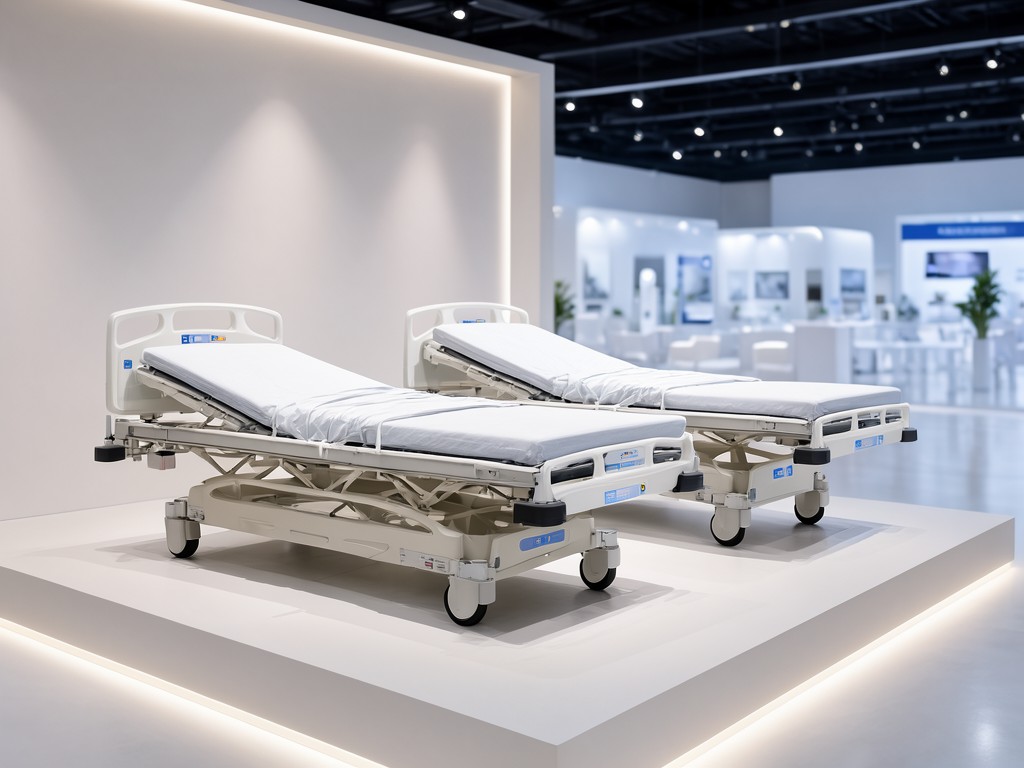
Specifying custom electric icu hospital beds top manufacturer for Wholesale and OEM Orders
Unit price settles the question only after the total cost of ownership is mapped across a three‑year service horizon.
A bed that meets the same static load rating can still diverge sharply in actuator duty cycle, corrosion resistance, and spare‑parts lead time — factors that drive warranty claims and reorder frequency.
Where Cheaper Alternatives Fall Short
Low‑cost frames often use thinner wall tubing that passes a 250 kg static test but yields measurable deflection after 30 k articulation cycles.
Actuators rated for 10 % duty cycle overheat in continuous ICU use, leading to motor burnout within 12 months.
Powder‑coat thickness below 60 µm allows salt‑spray corrosion at the head‑end joints, especially in coastal hospitals.
Noise levels above 45 dB disturb patient rest and breach many facility procurement specs.
Material Options and Their Trade-offs
Frame: Cold‑rolled steel, 2 mm wall, epoxy‑powder coat 80 µm — balances rigidity and corrosion resistance; aluminum alloy reduces weight 12 % but raises unit cost 18 %.
Deck: High‑pressure laminate (HPL) 12 mm, sealed edges — withstands chlorine‑based cleaners; phenolic resin alternative cuts cost 9 % but shows surface wear after 200 cleaning cycles.
Actuator housing: Glass‑filled nylon 66, IPX4 rated — maintains dimensional stability at 70 °C; metal housing adds 0.4 kg per actuator and improves heat dissipation.
Choosing steel frame with HPL deck yields a 10‑year structural warranty; aluminum frame with phenolic deck shortens warranty to 5 years but reduces freight volume 8 %.
Specification Range and Customisation Limits
| Parameter | Range / Options | Notes |
|---|---|---|
| Load capacity | 250 kg static / 180 kg dynamic | Tested to IEC 60601‑2‑52 |
| Articulation angles | Backrest 0‑70°, knee‑break 0‑30°, Trendelenburg ±12° | Electronic limit switches standard |
| Actuator speed | 15‑25 mm/s (adjustable via controller) | Duty cycle 20 % at 25 °C |
| Battery backup | 2 h full function, 8 h low‑power | Li‑FePO₄, replaceable without tools |
| Packaging | Wooden crate, 2 beds per crate, ISPM‑15 stamped | Dim: 2150 × 1050 × 550 mm, 180 kg gross |
| Finish / colour | RAL 9016 white, RAL 7035 light grey, custom RAL on MOQ ≥ 50 | Antimicrobial additive optional |
Customisation beyond the listed ranges — e.g., 300 kg dynamic load or 35 mm/s actuator speed — requires a dedicated tooling run and adds 4‑6 weeks lead time.
Matching the Product to the Buyer's Need
- Define clinical workflow – high‑acuity ICU with frequent repositioning → select 20 % duty‑cycle actuators and 2 h battery backup.
- Assess facility environment – coastal or high‑humidity → specify 80 µm epoxy‑powder coat and stainless‑steel fasteners.
- Calculate total cost of ownership – factor actuator replacement interval (≈ 5 years), cleaning‑agent consumption, and freight density; compare against unit price.
- Confirm regulatory package – IEC 60601‑2‑52, CE marking, local registration; request test reports before sample approval.
- Lock in branding – artwork files due at PO, colour match to RAL code, laser‑etched serial plate on headboard.
Each decision node narrows the configuration matrix, preventing over‑specification that inflates cost without clinical benefit.
Customisation Options and Their Limits
Mattress deck can be drilled for integrated scale sensors; maximum 4 load cells per bed, adds 1.2 kg and requires controller firmware update.
Side‑rail design: fixed, fold‑down, or split‑rail; split‑rail adds 3 kg and a 2‑week tooling lead.
Colour matching to a specific Pantone reference is possible only on powder‑coat; anodized aluminum rails cannot be recoloured post‑extrusion.
Private‑label packaging artwork must be supplied as vector PDF, 300 dpi minimum; any raster assets delay crate sticker production by 5 business days.
How Consistency Is Held Across Batches
Every production lot receives a first‑article inspection: dimensional check ±2 mm on frame, actuator stroke verification ±1 mm, and IPX4 spray test on 100 % of units.
Statistical process control tracks actuator current draw; a shift >5 % triggers a root‑cause review before the next batch ships.
Serialised QR codes on each bed link to a cloud‑hosted build record — material heat numbers, torque values, and test logs — enabling traceability for recall or warranty analysis.
Warranty claims are logged against batch ID; a claim rate above 0.8 % initiates a corrective‑action cycle that includes actuator lot quarantine and frame‑coat audit.
Next Steps
Submit your configuration worksheet and artwork files for a formal quotation and sample schedule.
Request a specification review and branding proof