China three function electric nursing beds with casters Supplier - Bulk Supply and Specification Guide
Materials and Construction Trade-offs
| Parameter | Typical Range | Notes |
|---|---|---|
| Overall length (mm) | 2100–2250 | Fits standard ward doorways |
| Width (mm) | 900–1000 | Allows side‑rail clearance |
| Height adjustment range (mm) | 400–800 | Low position eases transfer |
| Safe working load (kg) | 180–250 | Depends on frame gauge |
| Net weight (kg) | 85–115 | Heavier frames improve stability |
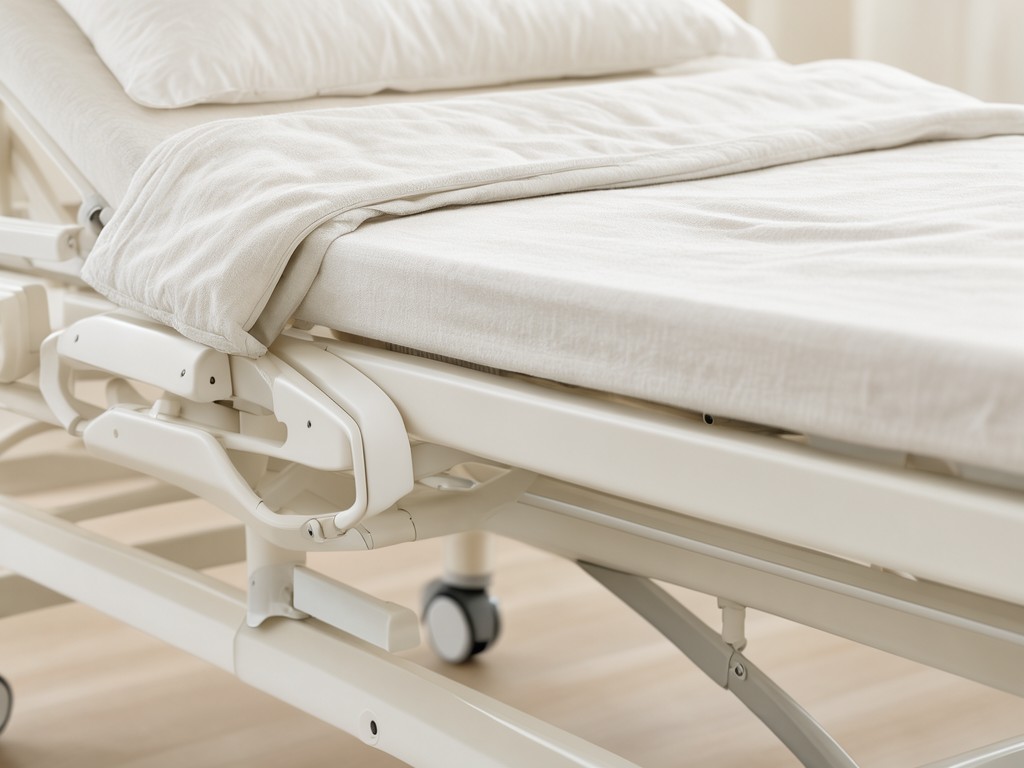
Material choice starts with the conditions the product will meet: frequent height changes, lateral forces from patient movement, and daily cleaning with chlorine‑based agents. A cold‑rolled steel frame with a 1.5 mm wall thickness gives the required rigidity without adding unnecessary mass, while a powder‑coat finish rated for 500 h salt‑spray prevents corrosion that would otherwise appear after six months in a high‑humidity ward. The ABS side panels are selected for impact resistance and easy wipe‑down; they do not absorb disinfectant, so surface degradation is minimal. Casters are a frequent failure point – twin‑wheel, 125 mm diameter, conductive polyurethane tread on a sealed bearing reduces rolling resistance and eliminates static buildup that can interfere with nearby monitoring equipment.
Specification callout: specify a minimum 1.5 mm frame wall and conductive casters when the bed will operate in ICU environments with sensitive electronics.
Comparing Two Standard Configurations
Cost and durability pull in opposite directions once the buyer decides between a baseline model and a reinforced variant. The baseline uses a 1.2 mm frame, single‑motor backrest and knee articulation, and standard 100 mm casters. The reinforced model upgrades to 1.5 mm frame, dual‑motor independent backrest/knee control, and 125 mm conductive casters. The price gap is roughly 12‑15 % per unit, but the reinforced version typically adds two years of service life under 24/7 occupancy.
Baseline Configuration
Frame: 1.2 mm cold‑rolled steel, powder coat
Motors: single 24 V DC, backrest + knee linked
Casters: 100 mm non‑conductive PU
Safe load: 180 kg
Typical lead time: 30 days
Reinforced Configuration
Frame: 1.5 mm cold‑rolled steel, powder coat
Motors: dual 24 V DC, independent backrest/knee
Casters: 125 mm conductive PU, sealed bearings
Safe load: 250 kg
Typical lead time: 35 days
Usage Scenarios and Buyer Segments
Where chlorine, sweat or UV exposure is routine, the reinforced configuration is the default choice. Large hospital procurement teams order the reinforced model for ICU and step‑down units because the dual‑motor layout allows independent Trendelenburg positioning, a requirement in many critical‑care protocols. Distributors serving nursing‑home chains often select the baseline model for general wards where budget per bed is capped and the 180 kg load rating covers the resident population. Private‑label buyers requesting custom colour panels or branded hand‑sets usually start with the reinforced chassis to avoid later redesign when the brand expands into higher‑acuity settings.
- ICU and high‑dependency wards – reinforced, conductive casters
- General medical wards – baseline, standard casters
- Long‑term care facilities – baseline with optional side‑rail kit
- Private‑label programmes – reinforced chassis, custom panels
Keeping Repeat Orders Supplied
Stock availability hinges on two levers: a rolling buffer of 15 % of the annual forecast held in the finished‑goods warehouse, and a modular sub‑assembly line that can switch between baseline and reinforced frames within a single shift. When a buyer places a repeat order, the factory pulls pre‑cut steel profiles from the buffer, assembles the chosen motor set, and runs a 30‑minute functional test on each unit before palletising. This approach reduces lead‑time variance to ±3 days for repeat SKUs, while new SKUs still require the full 30‑day tooling cycle.
| Test | Method | Acceptance Criteria |
|---|---|---|
| Static load | Apply 1.5× safe load for 5 min | No permanent deformation >2 mm |
| Cycle durability | 10 000 full articulation cycles | Motor current ≤10 % rise, no gear wear |
| Caster roll resistance | Push 30 kg at 0.5 m/s | Force ≤15 N per caster |
| Electrical safety | IEC 60601‑1 leakage test | Leakage <0.1 mA |
Ordering, Tooling and Lead-Time Questions
Buyers often ask how the tooling review works, what artwork files are needed for custom panels, and whether partial shipments can be arranged. The answers below reflect the current factory workflow.
Frequently Asked Questions
- What is the minimum order quantity for a custom colour? 50 units per colour; the powder‑coat line runs a batch of 200, so smaller runs share a batch and incur a surcharge.
- Can I mix baseline and reinforced frames in one container? Yes, provided the total pallet count respects the 20‑ft container height limit; each configuration is packed on its own pallet.
- What artwork format do you need for branded hand‑sets? Vector PDF or AI at 300 dpi, with a 3 mm bleed; the print area is 45 mm × 30 mm.
- How long does a tooling review take? Typically 10 business days after we receive the final CAD and BOM; the review includes a DFM checklist and a cost‑impact matrix.
- Is there a warranty on the motor assemblies? 24 months or 10 000 cycles, whichever occurs first, covering manufacturing defects only.
If your question is not listed, send it through the contact form and the engineering team will respond within one business day.
Ready to Review Tooling?
Submit your specifications and we will return a detailed DFM report and cost breakdown within ten business days.
Start Tooling Review