China bariatric electric hospital bed manufacturer: What Buyers Should Check Before Ordering
What the Design Has to Balance
| Option | Available Range | Effect on Load Rating or Lead Time |
|---|---|---|
| Overall width | 910 mm, 1070 mm, 1220 mm | Wider decks add frame weight and freight cube |
| Deck length | 2030 mm, 2130 mm | Longer decks increase packed volume |
| Safe working load | 250 kg, 320 kg, 450 kg | Higher ratings require thicker tube and closer weld spacing |
| Backrest angle | 0° to 70° | Standard across motor configurations |
| Height range | 450 mm to 800 mm | Dual-motor lift adds cost but eases transfer |
| Motor layout | Single, dual, triple actuator | More actuators raise price and service points |
| Finish | Epoxy powder coat, anti-microbial coat | Anti-microbial adds coating thickness and lead time |
Construction options diverge as soon as weight matters. A 250 kg frame uses lighter tube and wider weld spacing than a 450 kg frame, so the price gap sits in the steel, not the motor.
Buyers matching a private-label specification have to balance deck width against safe working load, height range against motor count, and packed cube against freight cost. A wider deck eases patient positioning but adds frame weight and reduces the number of beds per container. Lot-to-lot width drift of even three millimetres can make fitted sheets reject the bed at delivery, which drives returns and reorder friction. Consistency in tube wall thickness and coating thickness is what keeps reorders predictable.
What Actually Determines Performance
Material choice starts with the conditions the product will meet.
Cold-formed steel tube carries the static and dynamic load, while the actuator count determines how many deck sections move independently. A single motor usually lifts the whole deck, whereas dual or triple actuators split backrest, thigh, and height functions. The handset cable flexes thousands of times, so strain relief at the control box and coiled-cord length determine where the first failure appears. Powder-coat thickness and chip resistance matter because bed frames are wiped down daily with hospital-grade cleaners. Batch traceability on the motor lot and frame serial number lets a buyer trace a weld or actuator failure back to a specific production run.
Where This Product Beats Standard Alternatives
Where chlorine, sweat or UV exposure is routine, standard finishes chip and cables crack.
Bariatric beds run higher duty cycles and heavier loads than standard electric beds, so the weld joints at the scissor mechanism and the actuator mounting brackets take more stress per cycle. A thicker powder coat resists the abrasion of repeated washing, and a strain-relieved handset cable survives the tug of daily repositioning. Side rails on bariatric models use taller tubing and more hinge reinforcement because patients push against them with greater force. These differences show up in fewer warranty claims and longer service intervals, not in the purchase price alone.
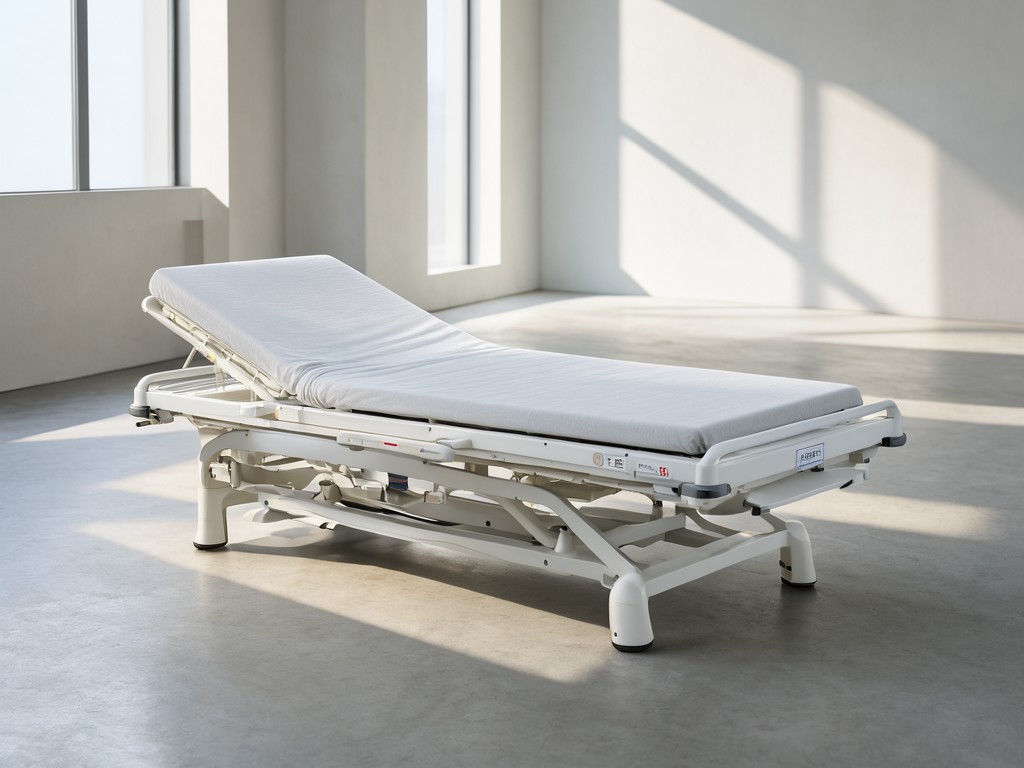
Bariatric Electric Bed
- Supports 250 kg to 450 kg safe working load
- Uses 2.0 mm to 2.5 mm cold-formed tube walls
- 125 mm to 150 mm twin-wheel casters with brakes
- Designed for daily articulation and wash-down
Standard Electric Bed
- Supports 150 kg to 200 kg safe working load
- Uses 1.2 mm to 1.6 mm tube walls
- 100 mm casters, lighter brake rating
- Built for general wards, not bariatric service
Critical specification rule: the safe working load assumes evenly distributed weight with the deck level. Patient transfer, side-rail leaning, or uneven loading creates point loads that can exceed the rating even when the patient weighs less than the limit.
Size, Weight and Specification Range
Size and weight specifications drive both patient safety and freight cost.
| Configuration | MOQ (units) | Lead Time (weeks) | Packaging |
|---|---|---|---|
| Standard width and load rating | 10 | 4-6 | Knock-down, palletized |
| Custom width or deck length | 20 | 6-8 | Knock-down, palletized |
| Custom colour or branding | 30 | 8-10 | Assembled or KD by request |
| Full container load | 40+ | 6-10 | Palletized, corner protection |
| Less than container load | 10-39 | 6-10 | Carton or pallet, foam edges |
Overall width choices of 910 mm to 1220 mm affect mattress fit and door clearance, while deck length changes packed volume. Net weight climbs with tube thickness and motor count, so a 450 kg model can weigh 40 kg more than a 250 kg model before mattress and bedding. MOQ steps at 10, 20, and 30 units reflect tooling and coating changeover costs, and lead time stretches when custom colour or branding is added. Batch traceability on each frame means replacement parts can be matched to the original production run.
Who Uses It and Where It Matters
Buyers specify this bed where standard widths fail.
Bariatric units in acute hospitals, long-term care facilities, and rehabilitation centres use these beds for patients who exceed the safe working load of a standard ward bed. Home care providers order them for high-weight patients who need daily backrest and thigh adjustment without transferring to a commode chair. The deck must survive repeated articulation, side-rail impact, and cleaning with chlorine-based disinfectants, while casters take the load of moving a fully made bed across corridor thresholds. Service conditions include continuous duty during shift changes and occasional overnight use with the backrest elevated.
Setup, Use and Replacement Parts
Setup time and spare-part availability set reorder rates.
Knock-down packing reduces freight volume but adds assembly time at the destination, so buyers need clear wiring diagrams for the handset and control box. Actuator duty cycle limits continuous operation to short bursts, and exceeding it burns out the motor winding. Caster bolts and side-rail hinges need periodic torque checks because vibration loosens fasteners over months of use. Replacement handsets, control boxes, and motors should carry the same lot code as the original unit to avoid voltage or plug mismatches. A preventive-maintenance schedule that logs coating chips and cable wear keeps the bed in service longer.
Send your artwork and branding for review before tooling is cut.
Request specification review