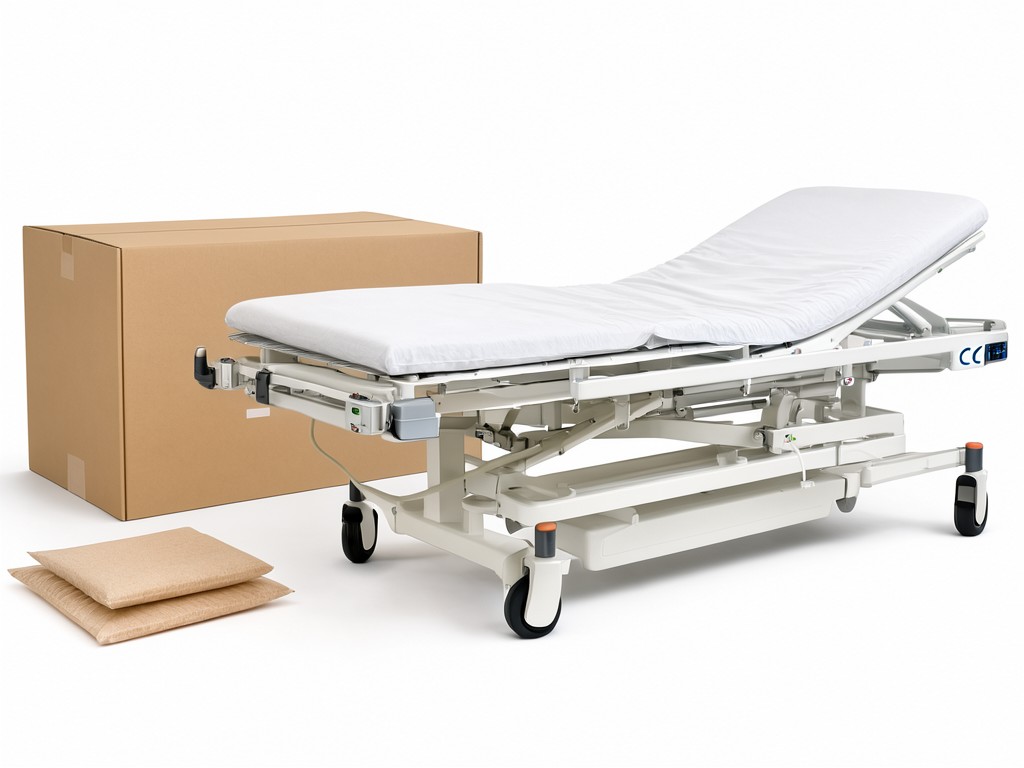
Trade-off: motor count and CPR actuation
A two-motor bed couples backrest and knee elevation on one drive, which cuts cost and reduces wiring but limits patient positioning. A three-motor bed separates back, knee, and height functions, giving clinical staff more adjustment range at the expense of one extra motor and handset channel per bed. For wholesale buyers, the CPR quick-release mechanism matters more than either choice: if the latch does not drop the back to flat under load within the required time, the bed fails its core safety function regardless of motor count.
Specifying CE Certified cpr electric hospital bed for clinic factory for Wholesale and OEM Orders
Design Constraints Behind the Specification
Most quality disputes start with a consistency gap. A frame that passes first-article inspection can sag at the platform edge by batch three if the weld sequence changes or the motor mounting brackets shift tolerance. The buyer’s decision rule should be dimensional repeatability across the production run, not a single golden sample.
Electric hospital beds are judged on load rating, cycle life, and CPR release speed. A static 200 kg safe working load is not the same as 200 kg applied across 10,000 backrest cycles, and the CPR lever must drop the backrest to flat under load within seconds or nurses lose the emergency function the bed is specified for.
Frame finish and deck materials determine wear in a clinic environment. Powder-coated steel resists chipping from bedside trolleys better than wet paint, while ABS or steel deck panels affect both patient comfort and resistance to cleaning chemicals. Specify coating adhesion and panel thickness before tooling approval, because rework after the first container lands costs more than any unit-price saving.
Usage Scenarios and Buyer Segments
A clinic bed must survive three different service profiles without a frame redesign. General wards need long-cycle stability, emergency bays need rapid CPR response, and private clinics need quiet adjustment during short procedures. Each profile loads the motors, casters, and platform differently.
| Usage level | Typical setting | Load rating | Daily adjustments | Key failure exposure |
|---|---|---|---|---|
| General ward | Long-term patient stays | 200 kg | 8–12 | Motor duty-cycle heat buildup |
| Emergency / triage | Rapid patient turnover | 250 kg | 20–30 | CPR latch wear, caster seizure |
| Private clinic | Short procedures and examinations | 180 kg | 4–6 | Platform sag at edge, handset cable fatigue |
OEM and ODM Programme Structure
The complaint that repeats across reorders is usually specification drift between the approved sample and mass production. OEM buyers keep the factory’s standard frame and change the headboard decal, handset overlay, and carton marking.
Batch consistency is the variable that controls warranty cost. A private-label programme should lock the bill of materials at sample approval and require batch-level traceability for motors, control boxes, and CPR latch components. If a supplier swaps motor vendors without notice, the duty cycle and noise level change across the same SKU, and returns rise even when the unit price stays flat.
Minimum order quantities and tooling charges follow the degree of change. Cosmetic OEM work carries low tooling cost and moderate MOQ. Structural ODM changes, such as widening the deck or altering the CPR lever geometry, carry steel die and weld-fixture costs that only amortise over larger annual volumes.
Inspection Items and Test Methods
Incoming inspection checks steel tube wall thickness, motor nameplate voltage, and CPR latch travel before assembly. End-of-line testing applies the rated load statically to the platform, cycles the backrest and height functions, and measures the CPR release time under that load. Electrical safety checks confirm the handset insulation and control box grounding match the CE marking file.
Cycle testing exposes the real limit of a bed specification. A motor rated for 2,000 cycles may fail at 1,200 if the duty cycle exceeds ten minutes on and twenty minutes off in a busy ward.
Each production lot receives a traceability number linking motors, control boxes, and frames to their supplier certificates.
Packing, Marking and Freight Configuration
Beds ship either fully assembled or CKD (completely knocked down) depending on destination and destination handling. Assembled beds occupy more cube per unit but reduce assembly labour at the clinic. CKD packs require clear part numbering and hardware bags matched to each frame serial number, or installation errors surface during commissioning.
Carton and pallet marking must show CE marking details, model code, voltage, and safe working load on the exterior. Foam corner protectors and stretch wrap prevent frame finish damage during trucking, while pallet height must fit standard container loading to avoid wasted air space. Freight cost per bed is driven by cube weight, so packing density is a commercial specification as much as a packaging choice.
Ordering, Tooling and Lead-Time Questions
Sample request and OEM terms
What is the minimum order quantity for private-label headboard decals and custom handset overlays? Cosmetic changes usually carry a lower MOQ than structural changes, but every variant adds a stock-keeping unit that affects reorder lead time.
How much tooling applies if we change the side rail profile or deck width? Structural ODM changes require new weld fixtures and steel dies, quoted separately and amortised only over larger annual volumes.
What sample lead time should we expect before placing a production order?
How is batch traceability recorded for CE marking compliance? Each lot receives a traceability number linking motors, control boxes, and frames to supplier certificates, which supports warranty claims and regulatory records.
Ready to qualify a second source?
Request a sample and review the inspection pack for the CE Certified cpr electric hospital bed. Contact us to start the sample-request process.