Specifying b2b medical electric adjustable beds and mattresses supplier for Wholesale and OEM Orders
Materials and Construction Trade-offs
Balance and load analysis shows the frame’s structural honesty long before a motor ever cycles. We specify 1.8 mm cold-rolled steel for the main chassis and 2.0 mm for the lift arms because anything thinner deflects under a 250 kg safe working load, and that deflection shows up as binding actuators and premature limit-switch failure within 18 months of ward service.
Powder coat adhesion is the silent warranty killer. A 90 µm epoxy-polyester finish survives 500 hours of salt spray and repeated quaternary ammonium disinfection; 60 µm does not. We mandate a three-stage phosphate pretreatment and cure at 200 °C. The cost delta is roughly $4 per frame, but it eliminates the rust-creep claims that appear after the first winter in coastal facilities.
On the mattress side, the cover decision drives 70 % of replacement cost. Four-way stretch polyurethane with welded seams and a 150 kPa hydrostatic head rating lasts three times longer than PVC with stitched seams under daily chlorhexidine wipe-downs. The PU adds $12–$18 per unit but cuts cover replacement labour by two-thirds over a five-year contract.
Measured Performance in Real Use
Motor Duty Cycle and Thermal Limits
Our standard LINAK-compatible actuators run 24 V DC, 6 000 N push force, IPX6 rated. The duty cycle is 10 % (2 min on, 18 min off) at full load. In a 30-bed ICU wing with frequent repositioning, that ceiling is hit by 06:00. Specifying the 30 % duty-cycle variant (forced-air cooled housing, 8 000 N) adds $22 per actuator but removes the thermal lockout that forces nursing staff to wait during emergency Trendelenburg.
Noise floor matters in recovery wards. The standard motor emits 48 dB(A) at 1 m; the low-noise variant drops to 39 dB(A) through helical-cut gears and rubber-isolated mounts. That 9 dB reduction is the difference between a patient sleeping through a position change and a night-shift call bell.
Mattress immersion testing under IEC 60601-2-52 shows 35 kg/m³ high-resilience foam with a 25 mm viscoelastic top layer maintains 85 % pressure redistribution after 80 000 cycles (simulating 5 years of 44 turns/day). Lower-density cores bottom out at 45 000 cycles, driving pressure-injury incident reports that cost facilities $14 000 per claim on average.
Specification Range and Customisation Limits
| Parameter | Standard Range | OEM Customisation Window | Tooling / MOQ Impact |
|---|---|---|---|
| Frame colour (powder coat) | RAL 9016, 7035, 9005 | Any RAL, anti-microbial additive optional | +$1.20/unit; 50 pcs MOQ per colour |
| Mattress cover fabric | PU welded, grey/blue | PU/PVC hybrid, custom print, RFID pocket | +$3–$9/unit; 100 pcs MOQ |
| Handset / control interface | 6-button backlit, coiled cord | Bluetooth, nurse-call integration, lockout profiles | +$18–$35/unit; firmware NRE $2 500 |
| Caster configuration | 4× 125 mm central-lock, 2 directional | 150 mm low-profile, conductive tread, 5th wheel steer | +$7/unit; 30 pcs MOQ |
| Side rail style | Full-length split, aluminium | Half-length, composite, integrated controls | New extrusion die $4 800; 200 pcs MOQ |
Custom colours and fabrics ship from the same line; control electronics and structural extrusions require dedicated tooling and a minimum 200-unit commitment to amortise the die and firmware validation.
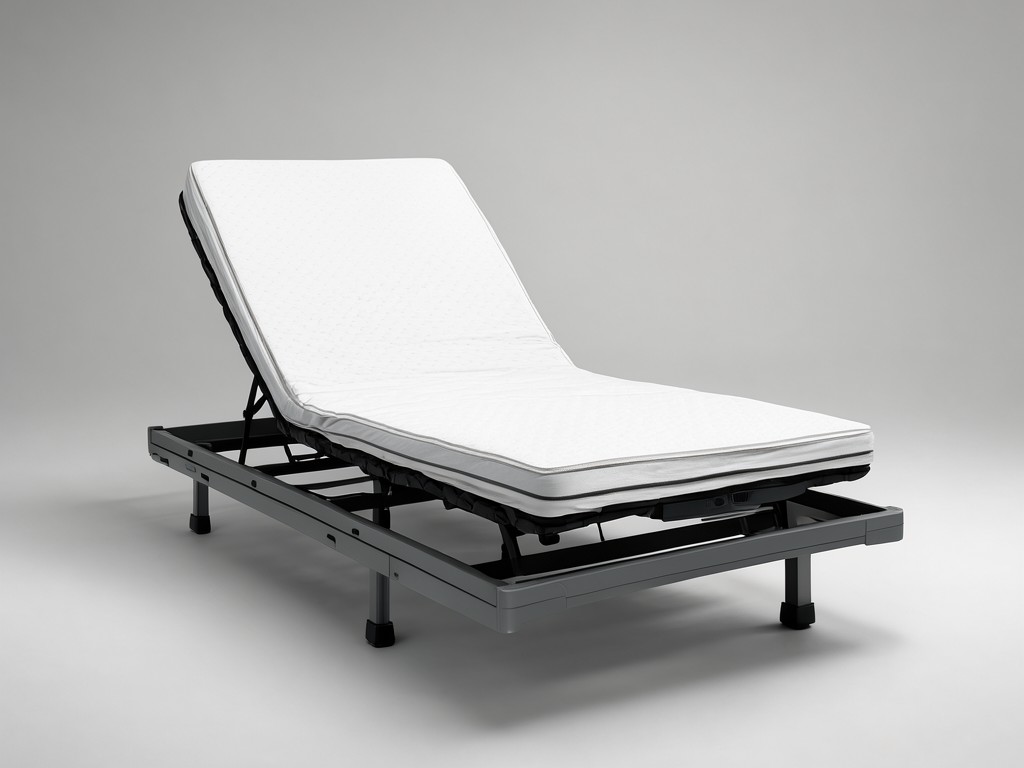
Working as a Production Partner, Not a Catalogue Supplier
Consistency depends on treating the bed as a system, not a collection of SKUs. When a private-label buyer sends a spec sheet, we run a virtual build review: BOM cost roll-up, actuator force curves against the requested mattress weight, caster offset versus door clearances in the target facility. That review catches 90 % of the integration issues that later show up as field returns — wrong voltage motors for Middle East shipments, caster locks that foul on European elevator thresholds, handset cords too short for Australian bed-head trunking.
We hold a library of 40 validated sub-assemblies (lift mechanisms, siderail latches, CPR release levers) that can be recombined without new tooling. A buyer needing a bariatric variant with 350 kg SWL and integrated scale pads gets a prototype in three weeks using existing chassis weldments and a reinforced cross-member we already qualify. New tooling only enters the conversation when the clinical requirement falls outside the library — paediatric side-rail gaps, MRI-conditional frames, or powered lateral tilt.
Documentation package ships with every PO: IEC 60601-1 test report, biocompatibility dossier for mattress materials, declared noise and EMI data, and a spare-parts interchangeability matrix keyed to serial-number blocks. That matrix alone cuts warranty admin time by 40 % because the distributor’s service tech orders the exact actuator revision without guessing.
How Consistency Is Held Across Batches
Incoming Steel & Foam
- Mill certs for yield strength ≥ 355 MPa; ultrasonic thickness scan on 10 % of sheets
- Foam ILD ± 5 % per ASTM D3574; density verified by water displacement on every 50th block
In-Process Weld & Coat
- Robotic MIG welds: 100 % vision inspection for bead geometry; destructive cross-section on first article per shift
- Coat thickness: 3-point DFT gauge on every frame; adhesion cross-hatch on 5 %
Final Functional Audit
- Full motion cycle under 120 kg load: travel limits, current draw, noise, CPR drop time < 8 s
- Mattress cover weld integrity: 200 kPa air pressure hold for 60 s
Batch traceability links each serial number to the steel heat lot, foam pour date, motor date code, and the operator who ran the final audit. When a distributor reports a siderail latch stiffness drift in month 14, we pull the five adjacent serials, re-test, and contain the recall to 12 units instead of 300.
Inspection Items and Test Methods
Deflection under load governs the pass/fail gate for every frame leaving the line. We apply a 1.5× SWL static load (375 kg distributed) for 60 minutes and measure permanent set at the centre of the sleep deck. Acceptance criterion: ≤ 3 mm. Frames exceeding 3 mm are scrapped — rework introduces heat-affected zones that fail fatigue testing later.
Actuator endurance runs 40 000 cycles at rated load with 30 % duty cycle in a 40 °C chamber. Current draw must not increase more than 15 % from baseline; limit switches must actuate within ± 2 mm of nominal position throughout. Motors that drift are root-caused to brush wear or gear lash and the batch is held for 100 % reinspection.
Mattress cover seam strength: welded seams tested to 250 N/50 mm per EN 1876-2; stitched seams (legacy only) to 180 N/50 mm. Hydrostatic head retest after 50 simulated clean cycles (0.5 % sodium hypochlorite, 25 °C, 10 min contact) must remain ≥ 120 kPa. Covers that drop below threshold trigger a formulation review with the film supplier.
Packaging drop test per ISTA 3A: single-bed carton (corrugated double-wall, 450 g/m²) dropped 10 times from 76 cm on edges and corners. Zero functional damage to actuators, handset, or caster stems is the release criterion. We spec corner protectors and internal foam cradles that add $3.50 per unit but reduce freight damage claims from 2.1 % to 0.3 %.
Setup, Use and Replacement Parts
Field Serviceability Design Rules
Every actuator, control box, handset, and caster is replaceable with a 4 mm hex key and a Torx T25 — no specialty tools. Actuator mounting uses M8×1.25 shoulder bolts with captured nuts; swapping a failed lift motor takes 12 minutes per side. Control box plugs are keyed AMP Superseal 1.5 connectors; wiring harnesses are loomed and labelled so a tech cannot cross head/foot channels.
We stock 15 critical spare SKUs (actuators, control boards, handsets, caster sets, siderail gas springs) in three regional warehouses. Lead time to any EU/NA/APAC port is 5 business days. Private-label partners can consign a 6-month buffer at their DC; we replenish on a rolling forecast at zero markup over production cost.
Cleaning protocol ships as a laminated card zip-tied to the frame: PU covers — 0.5 % sodium hypochlorite or 70 % isopropyl, 1 min contact, rinse, dry. No phenolic, quaternary ammonium > 0.5 %, or abrasive pads. Frame powder coat — same chemistry, avoid solvent soak on welded joints. Caster bearings are sealed; do not pressure-wash. Violating these voids the 3-year structural / 2-year electrical warranty.
Preventive maintenance schedule: quarterly actuator current draw check, annual caster swivel torque verification (≤ 1.2 Nm), biennial mattress cover hydrostatic spot-check. We provide a digital log template that integrates with common CMMS platforms (FM:Systems, Hippo, iOffice) so the facility’s biomedical team closes the loop without paper.
Next Step: Specification Review
Send us your clinical requirement sheet — target SWL, adjustment functions, mattress integration, control interface, and territory regulatory marks. We return a validated BOM, unit cost at your volume tiers, and a first-article timeline within 48 hours.
Open a specification review or request a physical sample kit (frame section, cover swatches, actuator cutaway) for your evaluation committee.